
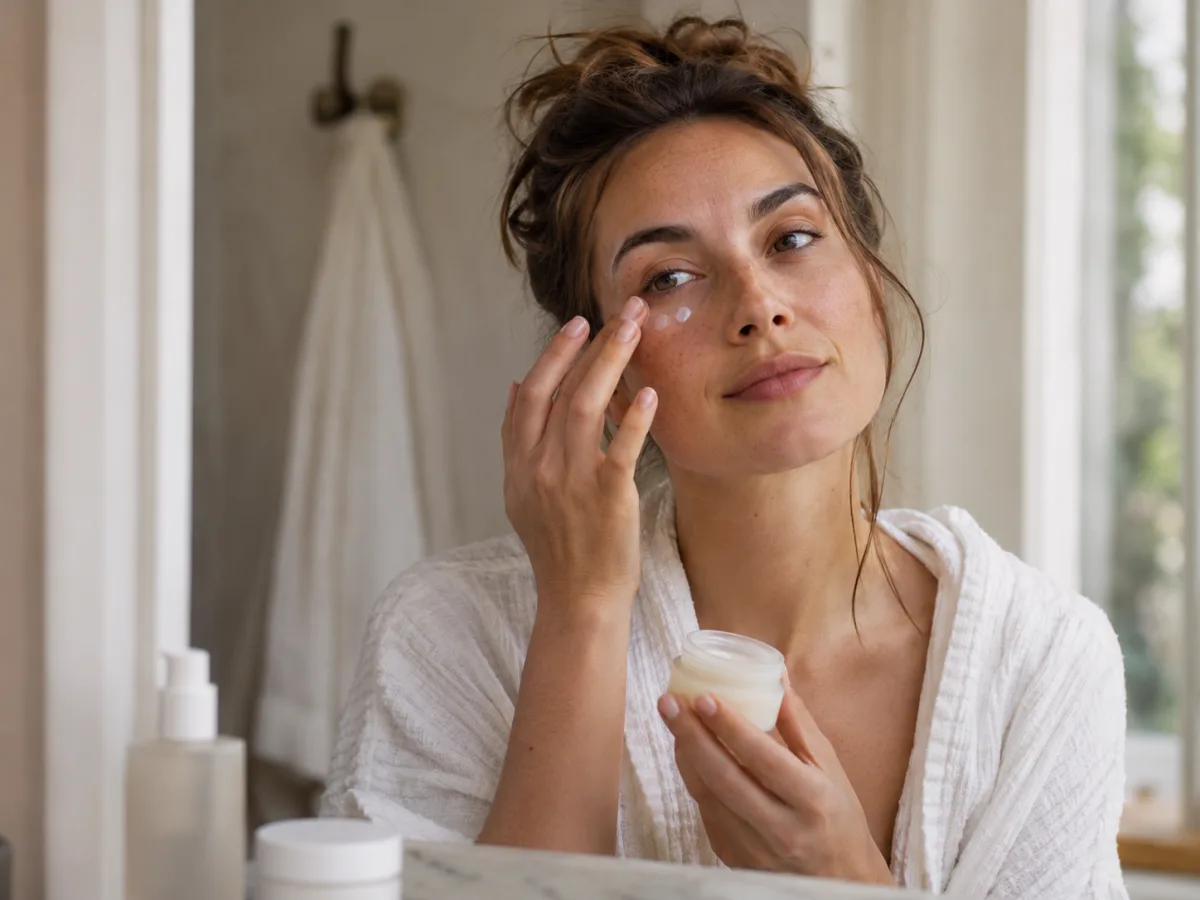
Some eye creams cost just €10, while others approach €100. Yet they often promise the same things: smoother skin, fewer fine lines and a more refreshed appearance. So how can you tell which products are genuinely worth considering and which rely more on appealing marketing claims?
We have selected six eye creams available in Finland that offer something worth examining beyond their marketing promises. We reviewed customer feedback, looked closely at ingredient lists and explored scientific research to assess how well the products’ claims hold up. Our selection includes affordable moisturisers, a retinol eye cream, a formula with sun protection and a more luxurious option designed to target fine lines.
There is no single winner that works for everyone. An excellent eye cream for dry skin may not be the best choice for fine lines, and dark circles cannot always be addressed with skincare alone.
How did we choose these products? We looked for products with positive customer reviews from retailers accessible in Finland and, where relevant, international websites. We also examined whether the ingredients supported the benefits that customers most frequently praised. However, it is important to remember that scientific evidence supporting an individual ingredient does not automatically prove the effectiveness of a particular finished product. Source: A scientific review of popular eye cream ingredients.
Six eye creams worth considering
These products have been selected for different skincare needs rather than ranked from best to worst. A high customer rating primarily reflects buyers’ experiences with a product. Scientific research, meanwhile, can help us understand whether its ingredients are likely to deliver the benefits people praise it for.
| Product | Who might it suit? | What makes it interesting? |
|---|---|---|
| No7 Pure Retinol | Those looking to prevent or reduce fine lines | Disclosed retinol concentration and a substantial number of customer reviews |
| Kiehl’s Avocado | Dry skin | Positive customer feedback and a rich, moisturising formula |
| La Roche-Posay Toleriane | Skin that is easily irritated | Hydrating ingredients and a formula developed for sensitive skin |
| Purito Wonder Releaf Unscented | Those looking for lightweight, affordable hydration | Excellent international reviews and a promising moisturising ingredient list |
| Clinique Smart Clinical Repair | Those looking for a more luxurious eye cream | Hydration, peptides and manufacturer-conducted product testing |
| Eucerin Hyaluron-Filler + Elasticity SPF20 | Daytime use and protection against photoageing | Hydrating ingredients, UVA/UVB protection and positive reviews |
1. No7 Pure Retinol Eye Cream – a promising option for fine lines
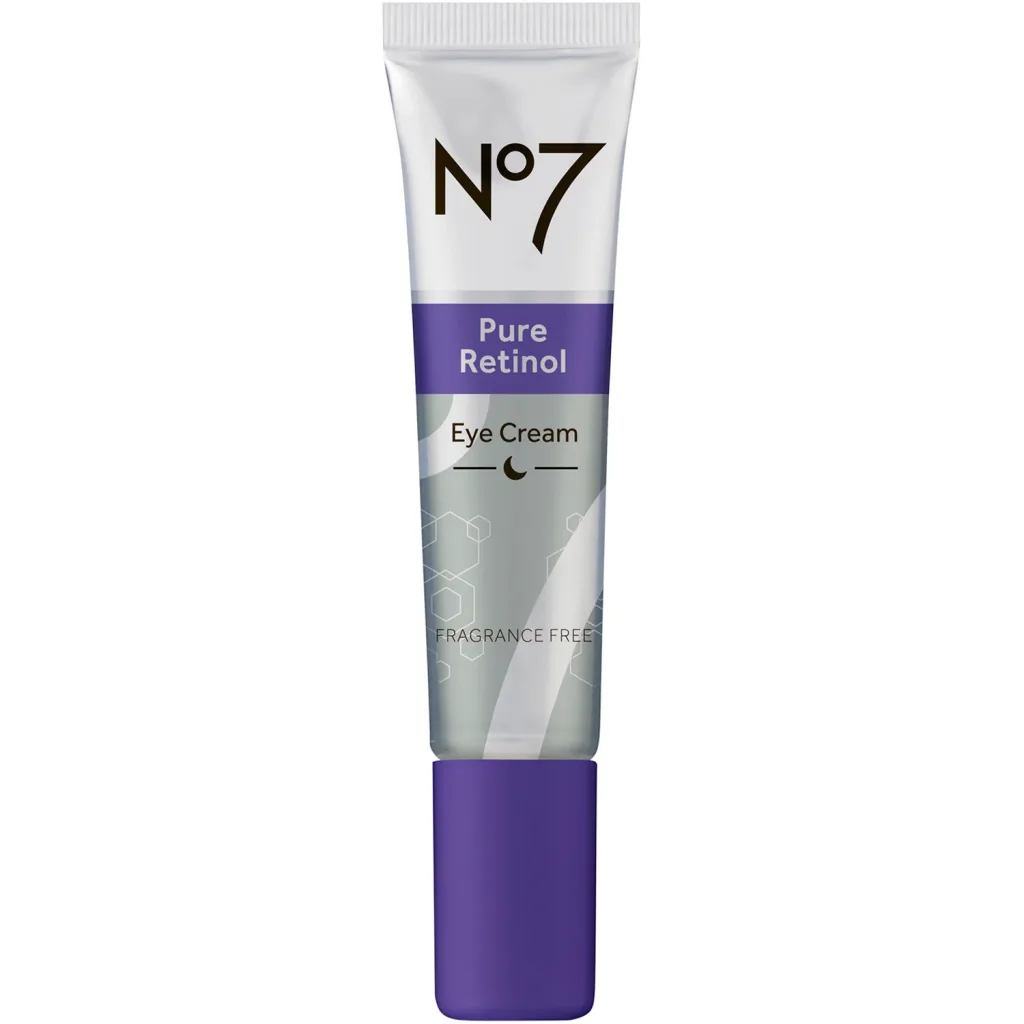
No7 Pure Retinol Eye Cream, 15 ml
0.05% retinol · Ulta 4.5 (318)
No7 Pure Retinol Eye Cream is designed to smooth fine lines around the eyes while reducing the appearance of dark circles and puffiness. The formula contains 0.05% retinol, an ingredient with scientific evidence supporting its potential to improve fine lines. Moisturising ingredients complement the formula, helping to keep the delicate eye area soft and hydrated.
View at Lyko
Affiliate link: Lyko
What do customers say?
Customers particularly appreciate the pleasant texture, easy application and the softer feel of their skin. However, not everyone has noticed an improvement in dark circles, and some reviewers report that the cream has caused dryness.
What makes the formula interesting?
The key active ingredient is retinol, which research suggests can help smooth fine lines and improve skin texture. The 0.05% retinol concentration used in No7 has also been investigated in research on crow’s feet. A small eight-week study reported positive results, although it examined a different formulation and therefore does not directly establish the effectiveness of No7’s eye cream.
Glycerin and shea butter help moisturise and soften the skin. However, the evidence supporting claims about reducing dark circles and puffiness is less convincing.
Sources: Clinical research on retinol (2021)
Our verdict: No7 is a promising option for those primarily concerned with fine lines, as its key active ingredient has supporting scientific evidence. However, retinol can irritate and dry out the delicate skin around the eyes, so it is best introduced gradually.
2. Kiehl’s Avocado Creamy Eye Treatment – rich hydration for dry skin
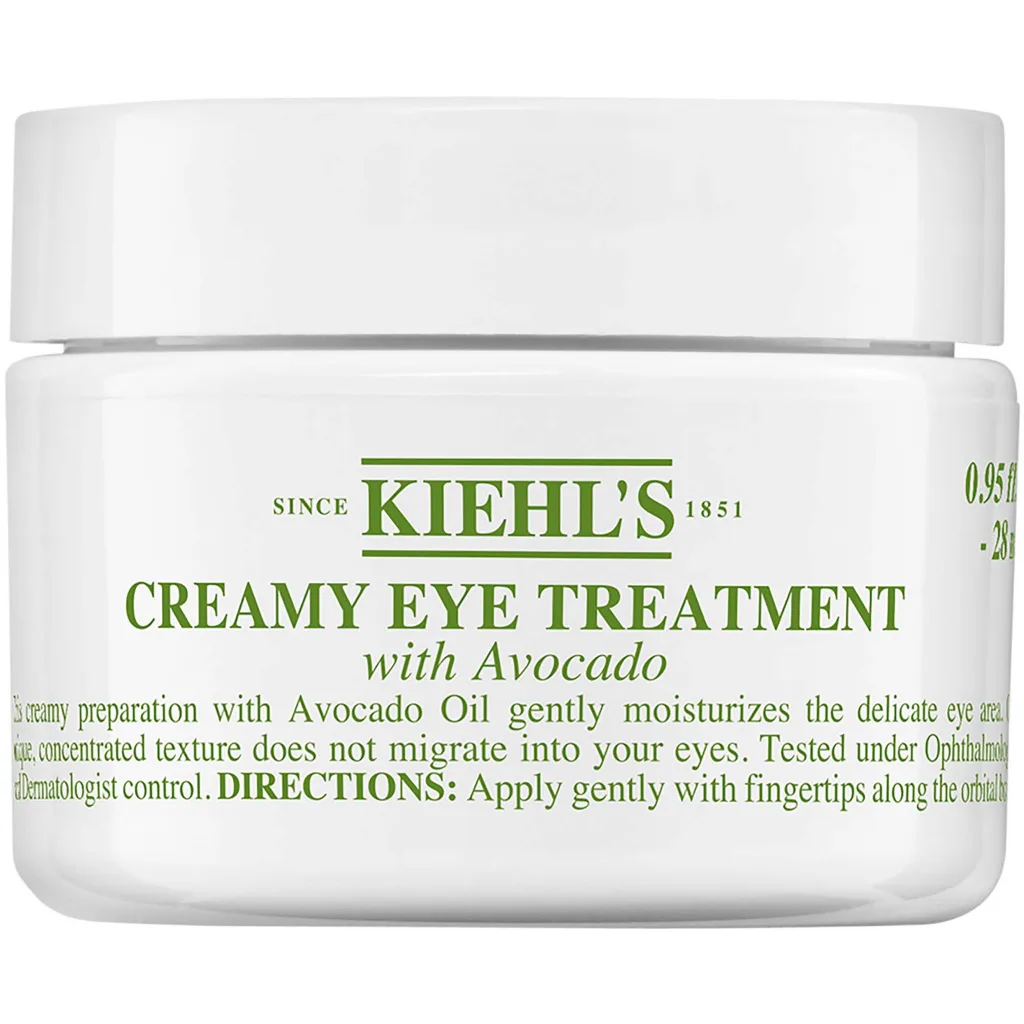
Kiehl’s Avocado Creamy Eye Treatment
Lyko 4.7 (156) · KICKS 4.5 (70) · 14 or 28 ml
Kiehl’s popular avocado eye cream promises to hydrate the delicate eye area, brighten its appearance and reduce visible puffiness. Its rich formula contains avocado oil and shea butter, both of which help soften dry skin. This makes it a particularly appealing option when the skin around your eyes feels tight and fine dehydration lines become more noticeable.
View at Lyko
Affiliate link: Lyko
What do customers say?
Customers particularly praise the cream for its moisturising properties, the soft feeling it leaves on the skin and how well it works under makeup. We have also tried Kiehl’s Avocado Creamy Eye Treatment ourselves, and our experience was very positive. We found it moisturising and particularly liked its rich texture. However, that same richness divides opinion among reviewers, with some finding the formula too thick or greasy.
What makes the formula interesting?
Avocado oil and shea butter act as emollients, helping to soften and smooth the skin. Moisturising creams are known to support skin hydration and reduce the roughness associated with dryness. Well-hydrated skin can also appear smoother, which may help explain some of the positive experiences reported by customers.
However, there is less convincing independent scientific evidence supporting the product’s claims about reducing puffiness and brightening the eye area. Its most clearly supported benefit is therefore hydration.
Sources: Review of plant oils and butters (2022) · Review of moisturising creams
Our verdict: An excellent candidate for dry skin around the eyes. The moisturising benefits praised by customers are well supported by the formula’s ingredients, although claims about brightening and reducing puffiness should be approached with more caution.
3. La Roche-Posay Toleriane Dermallergo Eyes – a gentle option for sensitive skin
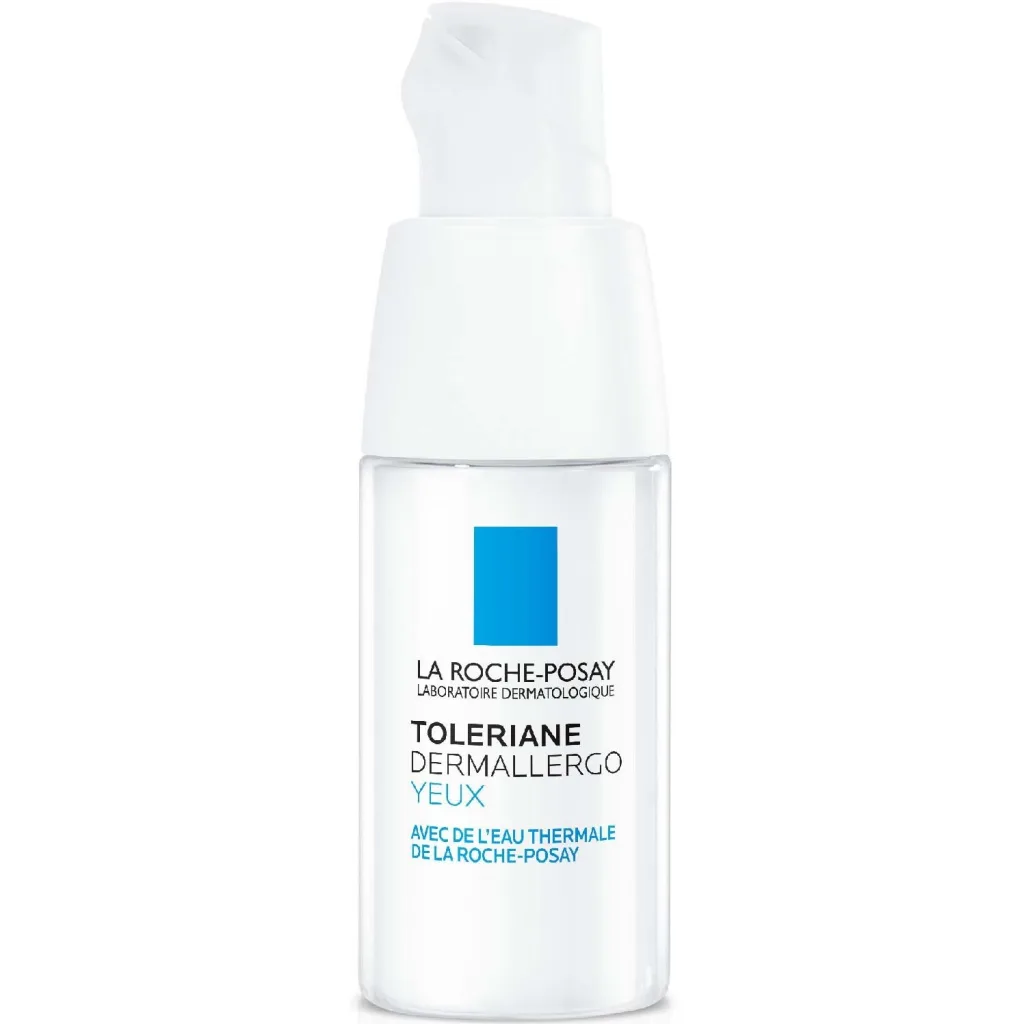
La Roche-Posay Toleriane Dermallergo Eyes, 20 ml
Lyko 4.6 (131) · Yliopiston Apteekki 4.55 (88) · 131 reviews
La Roche-Posay Toleriane Dermallergo Eyes has been developed specifically for sensitive and easily irritated skin around the eyes. This fragrance-free cream promises effective hydration while helping to relieve dryness-related redness, stinging and tightness. Its lightweight formula has also been designed with contact lens wearers in mind.
View at Lyko
Affiliate link: Lyko
What do customers say?
Customers particularly appreciate the cream’s gentle feel, moisturising properties and the fact that it does not irritate their sensitive eye area. Some reviewers also report relief from itching and stinging caused by dryness. However, there are occasional reports of irritation, so the formula may not suit everyone.
What makes the formula interesting?
The ingredient list is well suited to the cream’s moisturising and skin-conditioning purpose. Glycerin helps attract and retain moisture, while squalane and shea butter soften the skin. The formula also contains niacinamide, which research suggests can support the skin’s natural barrier and help reduce moisture loss.
These properties align well with the experiences reported by customers. However, ingredient studies alone cannot establish with certainty how effectively the finished product relieves stinging or redness.
Sources: Effects of glycerol on the skin · Niacinamide and skin barrier function
Our verdict: A particularly interesting option for sensitive and dry skin around the eyes. Its moisturising formula and positive customer experiences provide good support for its intended use.
4. Purito Wonder Releaf Centella Eye Cream Unscented – soothing hydration for sensitive skin
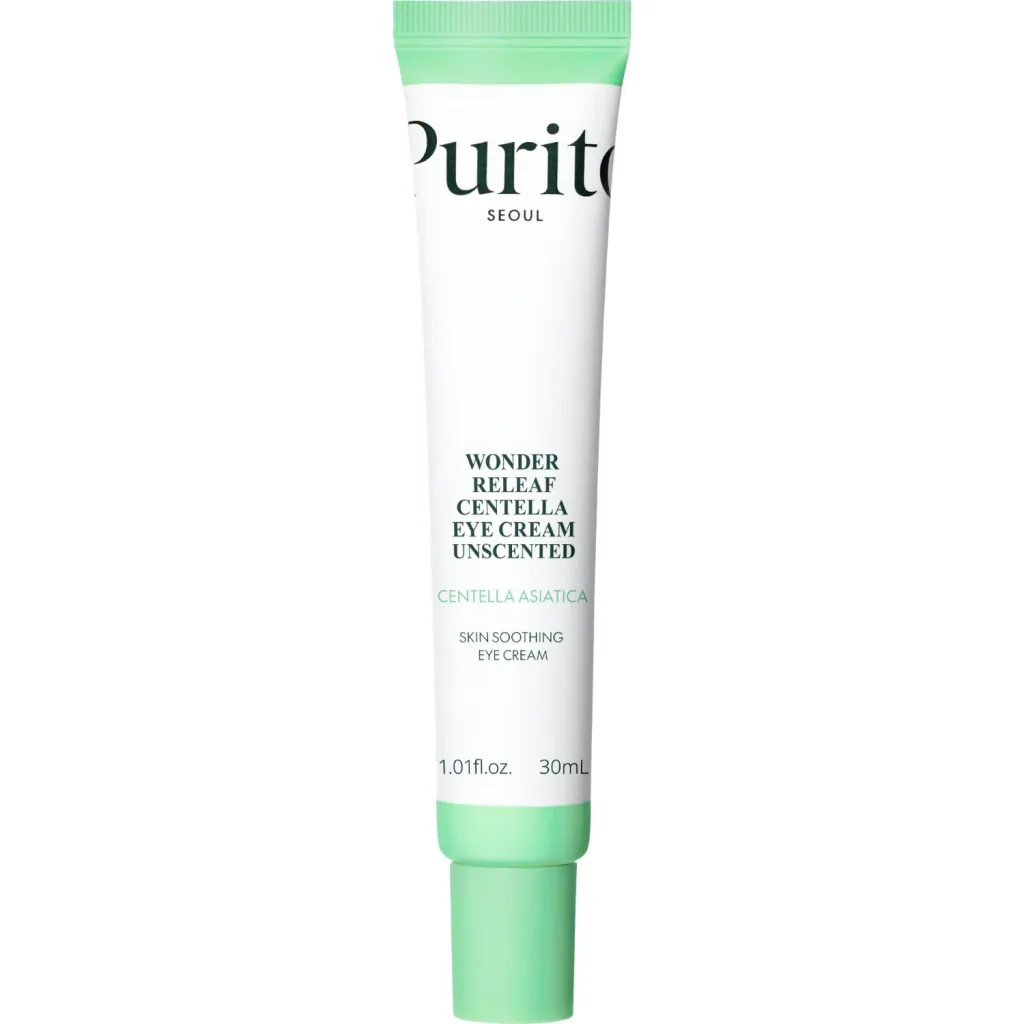
Purito Wonder Releaf Centella Eye Cream Unscented, 30 ml
Lyko 4.8/5 (16) · iHerb 4.7/5 (1,498)
Purito’s fragrance-free eye cream promises to hydrate and soothe sensitive skin while reducing the appearance of redness and puffiness. Its lightweight formula contains Centella asiatica extract, peptides and ceramide to support the skin’s moisture balance. It is particularly appealing for everyday use when the delicate eye area needs gentle care without a heavy or greasy finish.
View at Lyko
Affiliate link: Lyko
What do customers say?
Customers particularly praise the lightweight texture, quick absorption and long-lasting hydration. Many reviewers with sensitive skin report that the cream works well even around easily irritated eyes. It also receives positive feedback for its economical use and how well it sits under makeup. However, not everyone has noticed improvements in fine lines or dark circles.
What makes the formula interesting?
One of Purito’s most interesting ingredients is Centella asiatica, a botanical extract commonly used in skincare for its soothing properties. The formula contains approximately 2.55% of the extract.
Centella asiatica has also been investigated in clinical research. In a small study involving 25 participants, creams containing 2.5–5% of the extract improved skin hydration and showed anti-inflammatory effects. However, the study did not examine Purito’s formula or specifically investigate the skin around the eyes.
Glycerin helps attract and retain moisture, while ceramide supports the skin’s protective barrier. These ingredients have a more established body of scientific evidence behind their benefits. Further research is still needed to establish the effectiveness of the peptides used in eye creams for reducing wrinkles.
Sources: Clinical research on Centella asiatica · Review of glycerol research · Review of ceramide research
Our verdict: A strong option for everyday hydration. Customer feedback and ingredient research particularly support the cream’s moisturising properties. However, the evidence for reducing wrinkles or puffiness is less convincing.
5. Clinique Smart Clinical Repair – a premium eye cream for fine lines
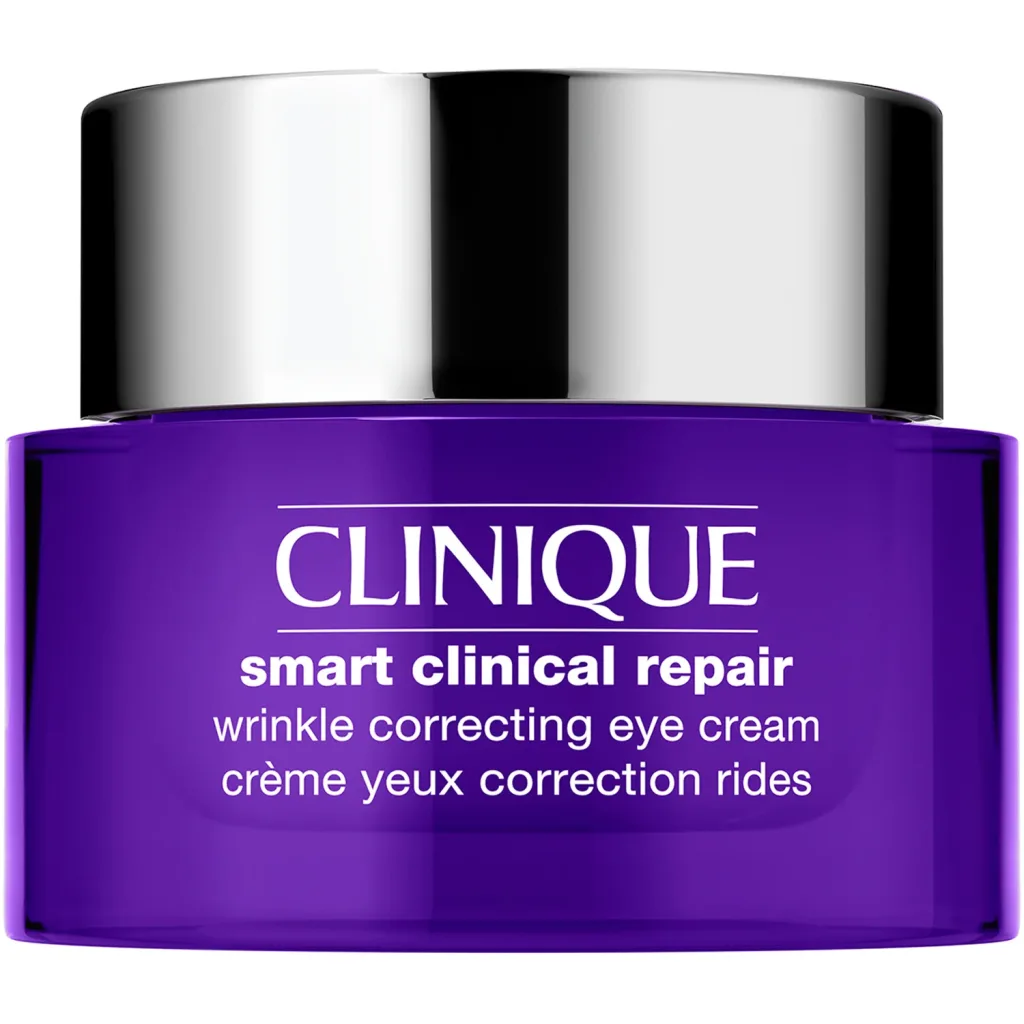
Clinique Smart Clinical Repair Wrinkle Correcting Eye Cream, 15 ml
NordicFeel 4.9/5 (8) · Ulta 4.5/5 (2,563)
Clinique Smart Clinical Repair Wrinkle Correcting Eye Cream promises to smooth fine lines, improve firmness around the eyes and reduce the appearance of puffiness and dark circles. This fragrance-free formula contains peptides and hyaluronic acid, selected to support skin elasticity and hydration. The manufacturer’s own product tests have also reported promising results in reducing the visible appearance of fine lines.
View at Lyko
Affiliate link: Lyko
What do customers say?
Customers particularly praise the cream’s moisturising properties, easy application and the smoother appearance of the skin around their eyes. Some reviewers also report a visible improvement in fine lines.
However, not all experiences have been positive. Some customers find the formula sticky or overly rich, while others have reported skin irritation.
What makes the formula interesting?
The peptides in this formula are particularly interesting when it comes to addressing fine lines. Their potential to support collagen production has been studied, but the scientific evidence for topically applied peptides is not yet as strong as it is for ingredients such as retinoids. Meanwhile, hyaluronic acid and glycerin help maintain skin hydration.
Clinique has also conducted tests on the finished product. In a four-week consumer study involving 150 participants, 85% felt that their crow’s feet appeared reduced. In a separate 12-week clinical test involving 48 participants, a 20% reduction in the visible appearance of puffiness was reported. These results are promising, but they come from manufacturer-reported studies, for which detailed methodological information is not as readily available as it typically is for peer-reviewed research.
Sources: Clinique’s product testing and ingredient information · Systematic review of peptide research (2026)
Our verdict: An appealing premium option for those looking to address fine lines and dryness. The substantial number of positive customer reviews and the manufacturer’s product tests support its claims, although there is no convincing independent evidence that it performs better than more affordable alternatives.
6. Eucerin Hyaluron-Filler + Elasticity Eye SPF20 – hydration and daytime protection
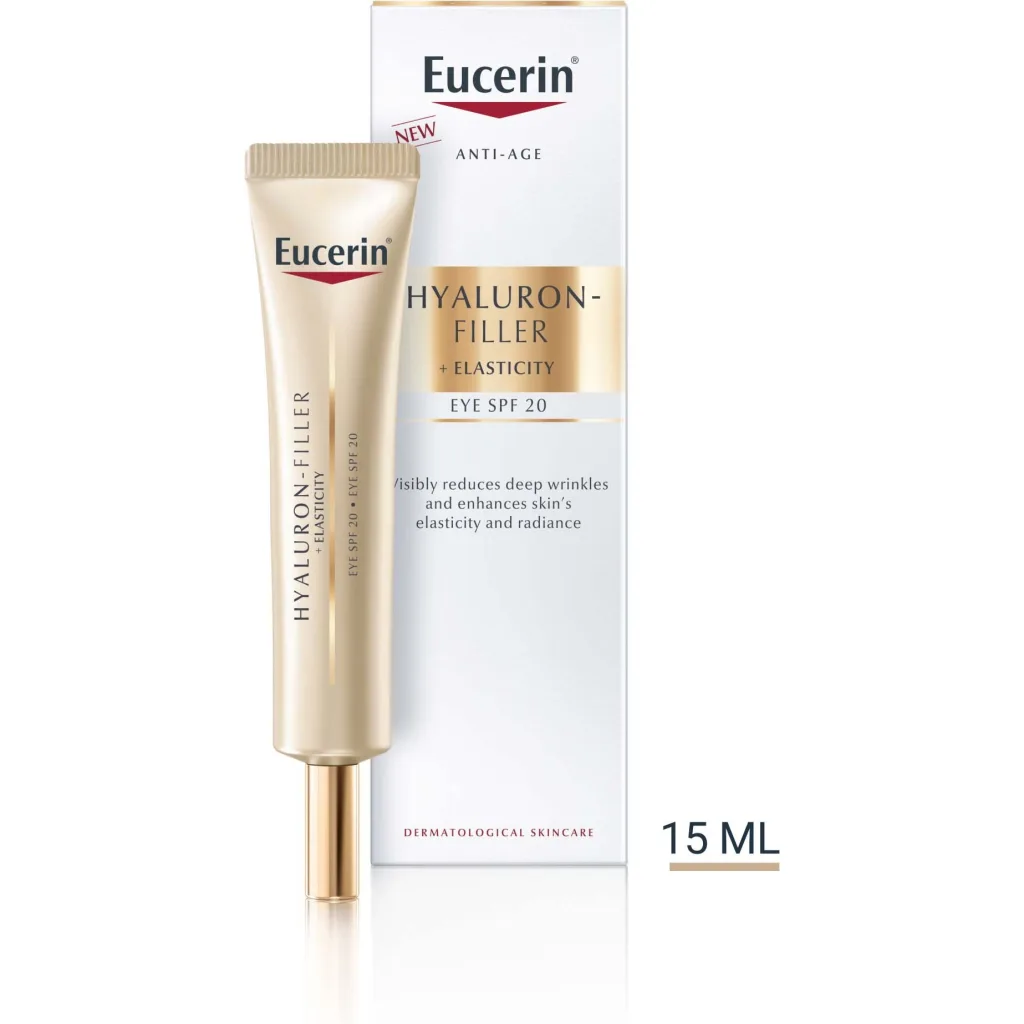
Eucerin Hyaluron-Filler + Elasticity Eye SPF20, 15 ml
Lyko 4.9/5 (15) · Sephora UK 4.4/5 (207)
Eucerin Hyaluron-Filler + Elasticity Eye SPF20 is designed to smooth wrinkles, improve skin elasticity and reduce the appearance of dark circles. The formula contains hyaluronic acid and arctiin, ingredients selected to provide hydration and support the elasticity of mature skin. What sets this product apart from the other eye creams in our comparison is its SPF 20 sun protection, which helps protect against premature skin ageing caused by UV exposure.
View at Lyko
Affiliate link: Lyko
What do customers say?
Customers particularly appreciate the effective hydration, pleasant absorption and softer feel of their skin. Some reviewers also report improvements in the appearance of fine lines and dark circles. However, not everyone has noticed a visible reduction in wrinkles.
What makes the formula interesting?
Hyaluronic acid helps attract and retain moisture in the skin, which can make fine dehydration lines appear less noticeable. The formula also contains arctiin and creatine, which the manufacturer associates with supporting collagen production and skin elasticity. However, there is limited independent scientific evidence demonstrating these specific effects in the finished product.
In Eucerin’s own consumer study involving 120 participants, 98% reported smoother-looking skin around the eyes and 97% felt that the area appeared brighter after four weeks of use. The results are encouraging, but they are based on participants’ own assessments.
From a scientific perspective, sun protection is another important advantage of this formula. A large randomised study involving 903 adults found that daily sunscreen use slowed visible skin photoageing over a follow-up period of more than four years. Although the study did not investigate this particular Eucerin product, it supports the importance of sunscreen in preventing premature skin ageing.
Sources: Eucerin’s product information and consumer study · Clinical research on hyaluronic acid (2024) · Randomised trial on sunscreen and skin ageing (2013)
Our verdict: A versatile option for mature skin, particularly if you want to combine hydration with protection against sun-related skin ageing. Customer experiences and the manufacturer’s consumer study are promising, although stronger independent evidence is needed to support claims about reducing deep wrinkles and dark circles. SPF 20 is a useful addition, but on sunny days, a broad-spectrum SPF 30–50 sunscreen suitable for the entire face is preferable when spending time outdoors.
What does science actually say about eye cream ingredients?
When choosing an eye cream, the best starting point is to consider your skin’s individual needs. If the skin around your eyes feels dry and tight, hydration should be your priority. Moisturising ingredients such as glycerin and hyaluronic acid can also help make fine lines caused by dehydration appear less noticeable.
When it comes to addressing fine lines associated with skin ageing, vitamin A derivatives known as retinoids, including retinol and retinal, are particularly interesting. Research has shown promising results, although the evidence is not entirely conclusive. Studies investigating conventional cosmetic retinol creams have reported both positive outcomes and cases where the products performed no better than standard comparison creams.
The same principle applies to other eye cream ingredients. Even when an individual ingredient has demonstrated benefits in scientific studies, this does not guarantee that every product containing it will deliver the same results. Relatively few finished eye cream formulations have been studied extensively, which is why it is worth considering both the ingredient list and real customer experiences when evaluating a product.
Scientific review (2024) · Critical review of cosmetic retinol research.
| Ingredient | When is it worth considering? | What should you keep in mind? |
|---|---|---|
| Glycerin and hyaluronic acid | When your skin needs hydration and fine dehydration lines are becoming more noticeable. Source | Moisturising the skin does not eliminate deep wrinkles. |
| Niacinamide and ceramides | When the skin is dry or its protective barrier needs additional support. Source | Their primary role is to support the skin barrier and maintain hydration. They do not necessarily reduce fine lines or dark circles. |
| Retinol and retinal | When your goal is to improve fine lines and skin texture. Source | Not all retinoid formulations have equally strong evidence supporting their effectiveness. They may also cause skin irritation. |
| Peptides | When you want to improve the appearance of skin firmness and reduce the visibility of fine lines. Source | The effects vary between different peptides, and strong clinical evidence for their wrinkle-reducing benefits is still lacking for many of them. |
| UV filters | When you want to protect your skin against premature ageing caused by sun exposure. Source | Adequate protection depends on UV intensity and how the product is applied. In strong sunlight, SPF 30 or higher is recommended. |
What about ingredient concentrations?
An INCI list tells you which ingredients a skincare product contains, but it does not usually reveal their exact concentrations. Under EU cosmetics regulations, ingredients must generally be listed in descending order of concentration. However, ingredients present at concentrations below 1% may be listed in any order after those present at higher concentrations.
This means that finding retinol near the end of an ingredient list does not, on its own, tell you whether the product contains enough to produce visible results. The concentration, overall formulation and way the product is used all influence its effectiveness.
Source: EU Cosmetics Regulation (EC) No 1223/2009, Article 19
Can an eye cream really get rid of dark circles?
There is no single solution that works for everyone, because dark circles can have several different underlying causes. They may result from skin pigmentation, blood vessels showing through thin skin or shadows created by the natural contours of the under-eye area.
Certain skincare products may help improve particular types of dark circles. However, shadows caused by deep tear troughs, for example, generally cannot be eliminated with an eye cream. This is why products promising a brighter eye area should not be expected to deliver the same results for every person.
Sources: Scientific review of the causes and treatment of dark circles · DermNet – Dark circles under the eyes
A note on using retinoids: Retinol and retinal can cause dryness and skin irritation. It is best to introduce them gradually and follow the manufacturer’s instructions. Avoid getting the product into your eyes and make sure to use sun protection during the day. Skincare products containing retinoids are generally recommended to be avoided during pregnancy.
Sources: American Academy of Dermatology – Retinoid or retinol? · Skincare during pregnancy
Frequently asked questions about eye creams
Do you really need a separate eye cream?
Not necessarily. A regular, gentle facial moisturiser may also be suitable for the delicate skin around the eyes, provided it does not cause irritation and is appropriate for use in that area. However, a dedicated eye cream can be a good option if your skin is particularly sensitive or you prefer a formula specifically developed for the eye area.
Is retinal the same as retinol?
No, although both are vitamin A derivatives known as retinoids. In the skin, retinol is first converted into retinal and then into retinoic acid. Retinal therefore requires one fewer conversion step to reach the active retinoic acid form.
However, this does not automatically mean that every product containing retinal is more effective than one containing retinol. The concentration and other characteristics of the formulation also influence the results.
How long does it take for an eye cream to work?
A moisturising eye cream can make the skin feel softer and appear smoother shortly after application. However, visible improvements in fine lines generally take longer to develop.
For example, studies investigating retinoids have observed changes in skin texture after several weeks or months of consistent use. The extent of these improvements varies depending on the product and the individual.
Sources: Glycerol and the skin (2008) · Clinical study on retinaldehyde (2018)
Sources and scientific research
- A Review of the Efficacy of Popular Eye Cream Ingredients (2024) – An overview of commonly used eye cream ingredients and the limitations of existing research.
- Efficacy and safety of retinaldehyde 0.1% and 0.05% creams (2018) – A clinical study investigating retinaldehyde.
- The efficacy and safety of multilamellar vesicle containing retinaldehyde (2021) – Research comparing retinal and retinol.
- Evidence for the Efficacy of Over-the-counter Vitamin A Cosmetic Products (2022) – A critical systematic review of the available evidence.
- Glycerol and the skin (2008) – Research on the effects of glycerol on skin hydration.
- Nicotinamide increases biosynthesis of ceramides (2000) – Research on niacinamide and skin barrier function.
- Oral and topical peptides for skin aging (2026) – A systematic review of peptide research, with a substantial proportion of the included studies focusing on oral peptide supplementation.
- Clinical significance of the water retention and barrier function-improving capabilities of ceramide-containing formulations (2021) – A review examining the effects of ceramide-containing moisturisers.
- Sunscreen and prevention of skin aging: a randomized trial (2013) – A randomised study investigating the effects of sunscreen use on skin photoageing.
- Periorbital Discolouration Diagnosis and Treatment (2021) – A review of the different causes of dark circles around the eyes.
- EU Cosmetics Regulation (EC) No 1223/2009 – European Union requirements concerning cosmetic ingredient labelling.