
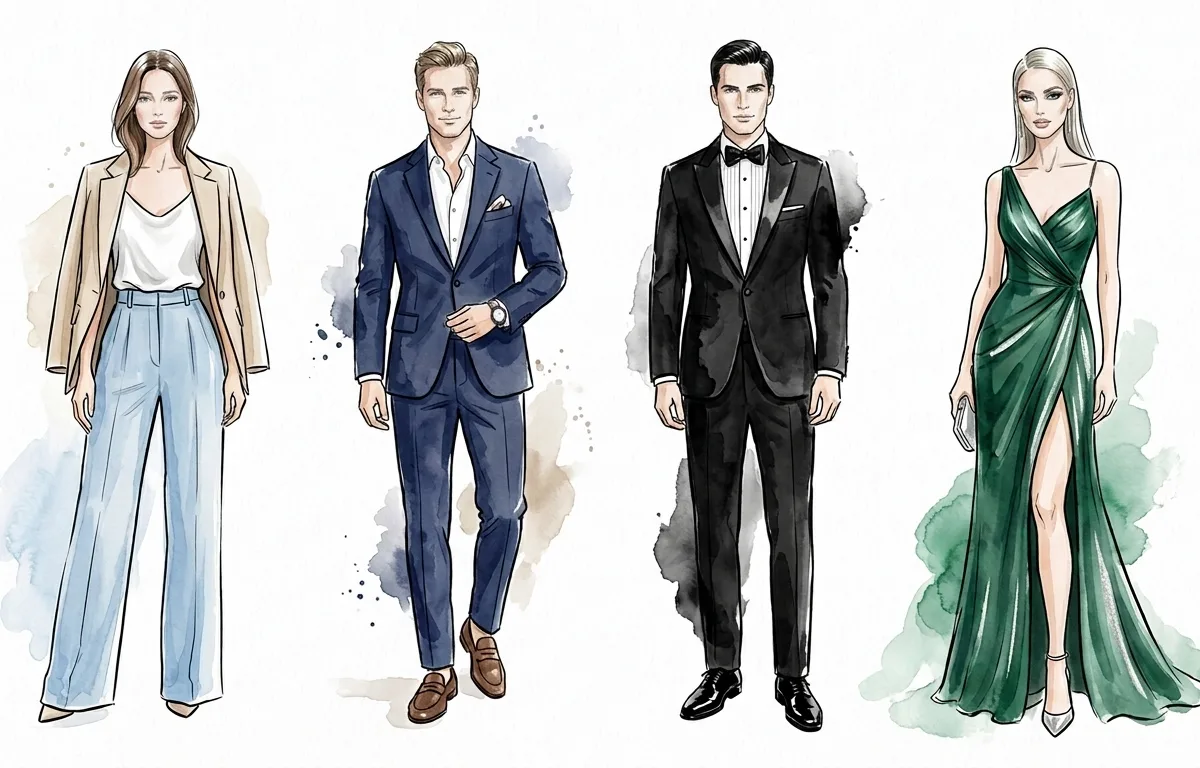
Dressing well is about so much more than simply choosing clothes. It is a powerful way to signal respect for the occasion, the hosts, and your fellow guests, while beautifully expressing your unique individuality. Yet, navigating different dress codes can often leave us with questions. What do they actually mean, and how should they be interpreted? What does Smart Casual look like in practice? Is a navy suit acceptable when the invitation calls for a Dark Suit? And does a White Tie invitation mean it’s time to head to a formalwear rental shop?
Why Do Dress Codes Exist?
The world of dress codes can sometimes feel like an antiquated labyrinth of rules, but their true purpose is to curate a cohesive atmosphere and ease the wardrobe dilemmas of the guests. When everyone aligns with the same code, no one has to fear being over or underdressed.
A dress code is never meant to restrict your personal style. Rather, it provides a curated framework and a sense of direction. Within these guidelines, you are entirely free to express your individuality through colors, textures, accessories, and silhouettes.
In this guide, we break down the most common dress codes and their various titles, sorting through the terms that are easily confused.
1. Casual – Relaxed Dressing | Leisure Style
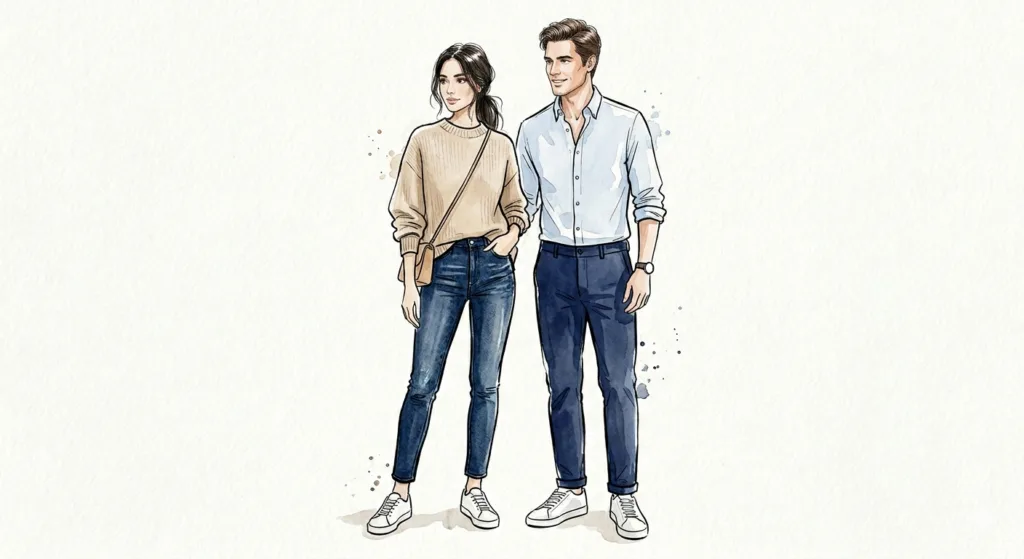 Casual is the most laid-back of all dress codes. It is the perfect fit for catching up with friends, informal gatherings, relaxed birthday parties, and various weekend events. In casual dressing, the golden rule is an effortless neatness. Well-fitted jeans, tailored chinos, high-quality knitwear and t-shirts and button-downs are always foolproof choices. Clean sneakers in good condition can also effortlessly round out the look.
The casual style is where comfort meets a polished everyday aesthetic. A great, simple rule of thumb for social casual events is to choose the neatest, most elevated casual pieces from your wardrobe, leaning into an approachable kind of elegance. In practice, this translates to high-quality essentials, such as well-fitting jeans or chinos paired with a fresh t-shirt, a refined sweater, or a relaxed button-down. When the ensemble is clean and pressed, the outfit feels comfortable to wear while signaling that you put thought into getting ready for the event.
What to Wear?
- For Women: An excellent choice would be a pair of dark wash jeans, a high-quality knit (such as merino wool or fine cotton), and a sleek top underneath. A relaxed shirt-dress, a chic midi skirt, or a soft knit dress also work wonderfully. When it comes to fabrics, opt for natural fibers that drape beautifully. Finish the look with clean white leather sneakers, ballet flats, or soft leather loafers.
- For Men: A sharp and reliable look centers around clean, straight-leg chinos or dark jeans with a flawless finish. For the top, a high-quality t-shirt, a crisp polo, or a relaxed cotton or linen shirt works brilliantly. For cooler days, layer a classic crewneck sweater or a sharp cardigan over the outfit. The best footwear choices include clean, monochrome leather or canvas sneakers, loafers, or lightweight suede shoes.


Sister Code: Similar, but Not Quite the Same
- Activewear / Athleisure: This aesthetic often runs parallel to casual dressing, but stands apart due to its distinctly athletic edge. While a casual code leans toward tailored knitwear and cotton trousers, Athleisure brings premium leggings, sleek lifestyle tracksuits, and technical fabrics into street style. However, an invitation specifying a Casual dress code asks for a slightly more polished touch. For those occasions, it is best to swap the sporty elements for a refined sweater and high-quality trousers, signaling that you dressed up specifically for the event.
2. Smart Casual – Effortless Elegance
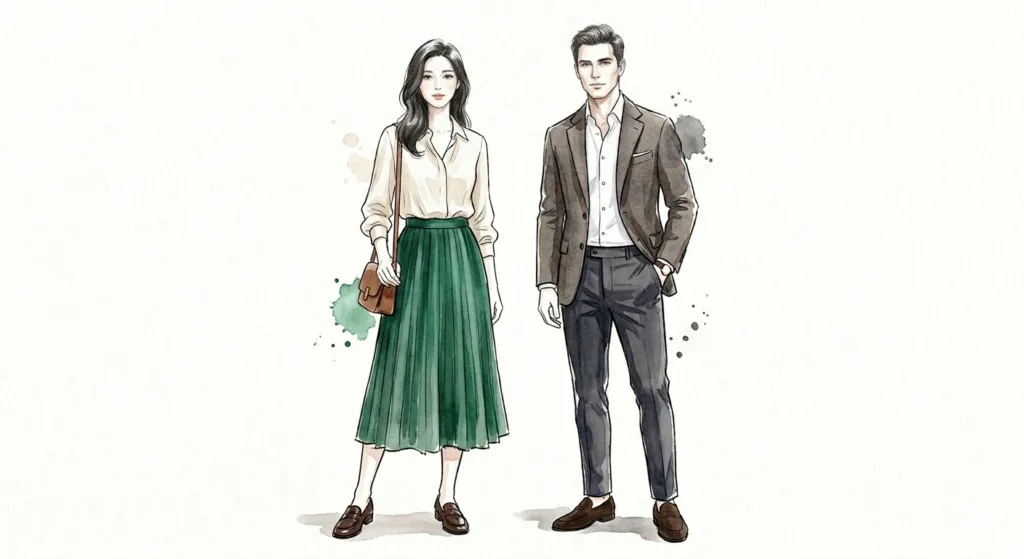 Smart Casual is notoriously one of the most open-to-interpretation dress codes. It is frequently requested for relaxed weddings, graduations, elegant birthday parties, and corporate events. The creative challenge lies right within the name: the ensemble must be polished and sharp (smart), but never overly formal or rigid (casual).
Smart Casual grants stylistic freedom, but the final look should always appear curated. Clothing must be in pristine condition and nicely fitted. This style beautifully merges ease with a refined look. For instance, sharp chinos, a crisp button-down, and a tailored blazer create a perfectly balanced ensemble. A high-quality knit and leather shoes also fit the aesthetic beautifully. For feminine elegance, lean into beautiful, fluid materials like silk blouses, an elegant midi skirt, or a modern pantsuit. Complete the outfit with polished loafers or sleek pumps to achieve a look that is simultaneously comfortable and tailored. The secret to mastering this dress code is balance. Think of it as your casual wardrobe elevated by one or two festive elements.
What to Wear?
- For Women: A chic pantsuit, a sharp midi skirt paired with a premium knit, or an elevated dress (such as a tailored shirt-dress or a wrap dress). Focus heavily on fabrication: linen, silk, and high-grade cotton are always impeccable choices. For footwear, choose sleek leather sneakers, sophisticated loafers, or low-heeled pumps.
- For Men: Sharp chinos or tailored dress trousers paired with an elegant button-down. No tie is required. Layer the look with a fine knit, a sharp cardigan, or a relaxed blazer. Finish with loafers, suede shoes, or completely clean, monochrome leather sneakers.


Sister Code: Similar, but Not Quite the Same
- Casual Chic / Dressy Casual: Consider this the trend-conscious younger sister to Smart Casual. While Smart Casual relies on traditional, timeless closet staples (like trousers and tailored shirts), Casual Chic plays delightfully with current trends and sartorial contrasts. Here, you can easily pair a stunning silk evening top with relaxed, wide-leg trousers and a blazer, or inject an edge into your look by layering a chic leather jacket over a dress. This style is inherently more liberated, offering plenty of room for creative style experiments.
3. Business Casual – Office Attire | Smart Business
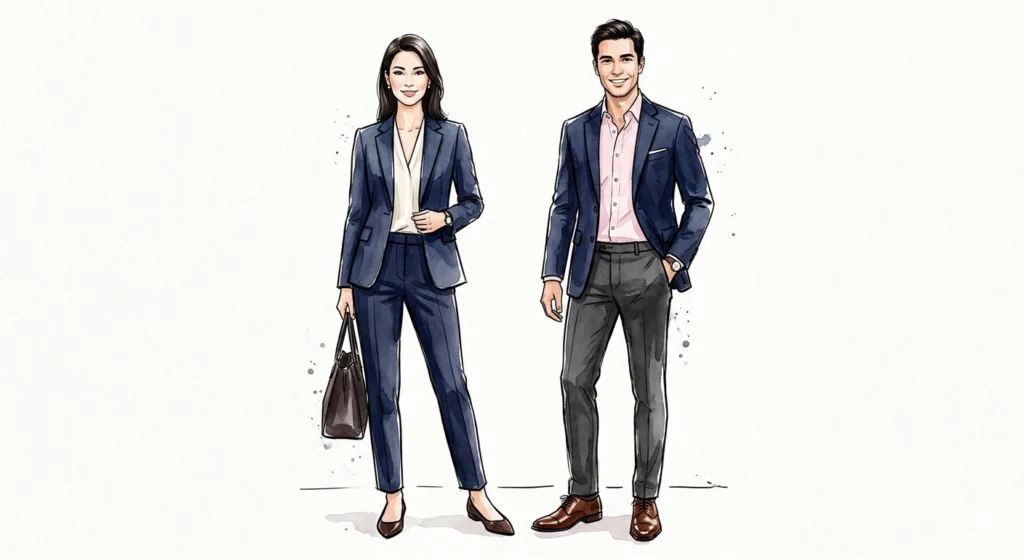 Business Casual is a widely used dress code, particularly in corporate environments, seminars, and networking events. It sits a step above Smart Casual in formality, yet remains distinctly more relaxed than a traditional, strict dark suit. The core objective of this dress code is to project a polished, trustworthy, and professional impression.
What to Wear?
- For Women: A sheath dress paired with a tailored blazer, an elegant pencil skirt matched with a silk blouse, or a high-quality pantsuit. Cuts and silhouettes should lean conservative. Ideal footwear choices include polished pumps, sleek loafers, or ankle boots.
- For Men: Tailored trousers or smart, dark chinos paired with a collared shirt and a blazer or a refined knit. A tie is optional, but certainly acceptable. Complete the look with polished leather dress shoes or leather loafers (athletic sneakers do not belong under this dress code).


Sister Code: Similar, but Not Quite the Same
- Business Formal / Boardroom Attire: This is the stricter, more traditional counterpart to Business Casual. If an event calls for Business Formal, men are expected to wear a full suit (in dark, grey, or pinstripe) with a tie. For women, a formal, understated skirt suit or pantsuit is required. Business Casual grants you the freedom to skip the matching suit jacket or style mismatched trousers and blazers.
4. Cocktail – Festive Holiday Attire | Party Attire | Semi-Formal
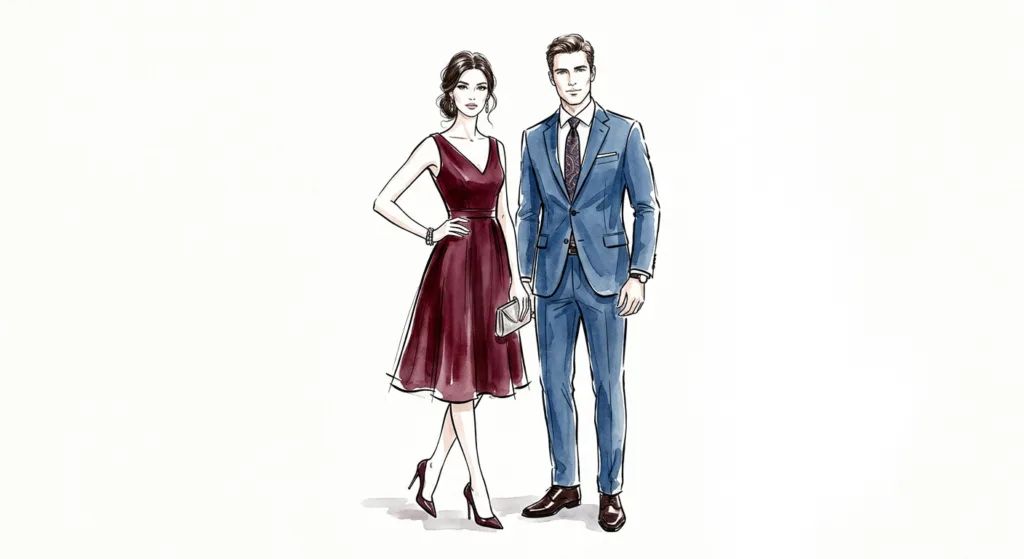 The Cocktail dress code comes into play for events starting in the late afternoon or early evening. It applies to more elevated occasions, such as cocktail parties, corporate galas, milestone birthdays, or chic yet relaxed weddings. This code invites you to showcase a touch of trendiness, color, and personal flair.
What to Wear?
- For Women: The classic little black dress (LBD) or any other elegant knee- or midi-length party dress. A festive jumpsuit or a striking pantsuit elevated with statement jewelry also works beautifully. High heels or chic, dressy flats are highly recommended.
- For Men: A dark or mid-blue suit, a dress shirt, and a tie or bowtie. A sharp blazer paired with tailored trousers is also acceptable if the event is more casual in nature or held during the summer season.


Sister Code: Similar, but Not Quite the Same
- Festive Attire: You might spot this on invitation cards, even though it is not an official, standardized dress code. The host typically means: “Dress up a bit more than your day-to-day, but don’t overthink it.” In practice, it falls somewhere between Smart Casual and Cocktail. A sharp suit without a tie suffices for men, while an elegant dress or a festive pantsuit is ideal for women.
5. Dark Suit – Dark Suit | Lounge Suit
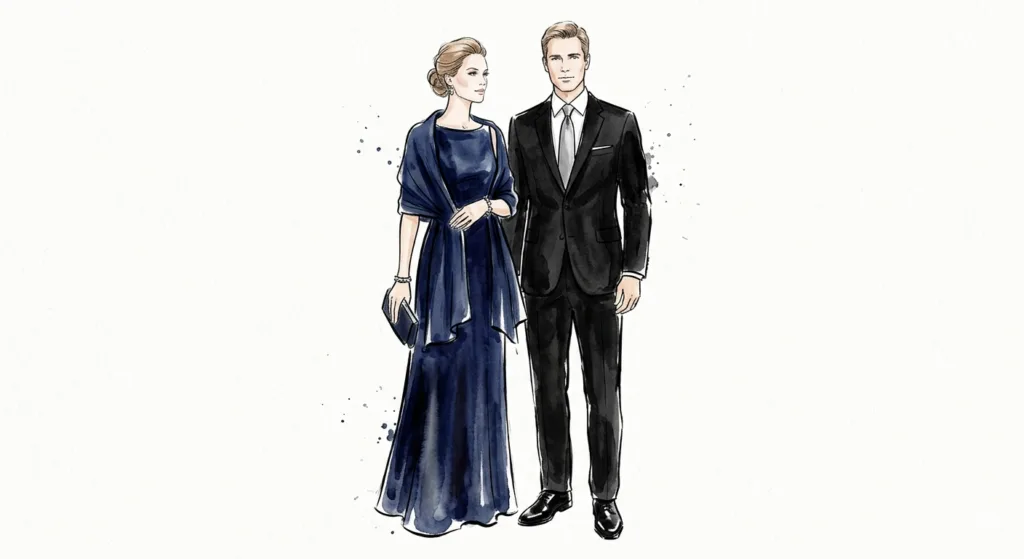 When you receive an invitation to a wedding or a formal celebration, Dark Suit is a common dress code. This is an official standard. It is a foolproof, dignified choice where the sartorial rules are quite strict.
What to Wear?
- For Women: A festive dress crafted from beautiful materials. For events commencing before 6 PM, a knee-length hemline is appropriate, but for evening celebrations, a floor-length or ankle-length evening gown is preferred. Shoulders should be covered during church services or formal segments with, for example, a shawl or a blazer. Formal skirts and pantsuits are also acceptable.
- For Men: A black, charcoal, or dark navy suit, preferably made of wool or a wool blend. The suit is always paired with a white dress shirt and an understated, festive tie. Complete the look with black, thin-soled leather shoes and black socks.


Sister Code: Similar, but Not Quite the Same
- Light Suit / Summer Suit: Sometimes the dress code for summer weddings is specified as “Light Suit.” It carries the exact same level of formality as a Dark Suit, but it grants men permission to wear light grey, linen-toned, or beige suits. For women, this often suggests slightly lighter, brighter, and more floral material choices.
6. Black Tie – Tuxedo | Dinner Jacket
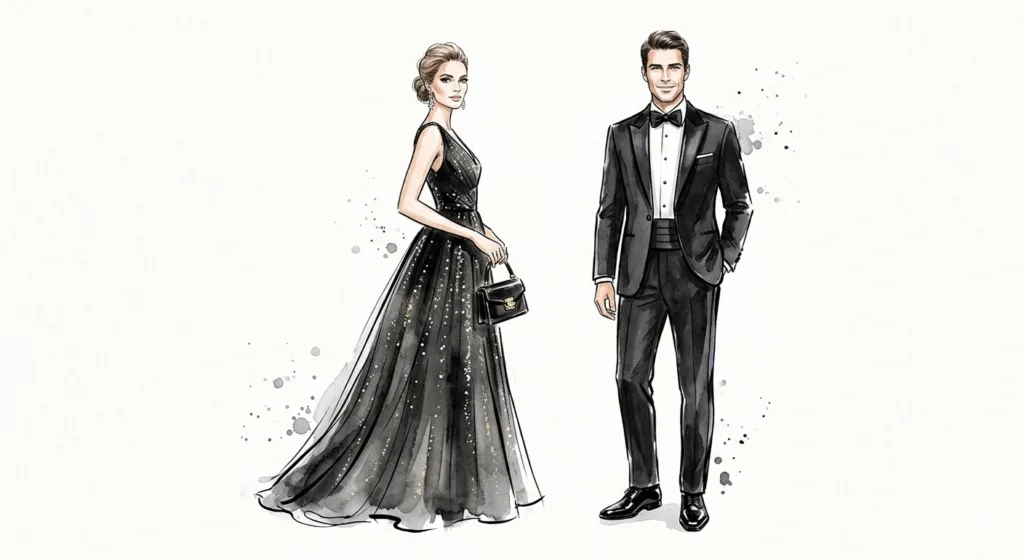 When transitioning to the Black Tie dress code, we step into the world of formal evening wear and cinematic glamour. This code is reserved for grand galas, formal weddings, premieres, and upscale celebrations commencing after 6 PM.
What to Wear?
- For Women: A floor-length evening gown or a highly sophisticated, ankle-length cocktail dress. Fabrics and accessories should be striking, radiating festive elegance. The bag should be a small evening clutch.
- For Men: A black or midnight blue tuxedo featuring silk (often satin) lapels. The tuxedo shirt must be white, paired exclusively with a black bowtie (never a necktie) and a cummerbund (cummerbund) or a tuxedo vest. Complete the look with black patent leather shoes.


Sister Code: Similar, but Not Quite the Same
- Black Tie Optional: This international code implies that while the host prefers guests to wear a tuxedo, they understand not everyone owns one. If you do not have a tuxedo, you can absolutely wear a sharp, well-fitted dark suit, a white shirt, and an elegant necktie without breaching etiquette. For women, however, this code practically still calls for a floor-length evening gown.
7. White Tie – Tailcoat | Grand Gala
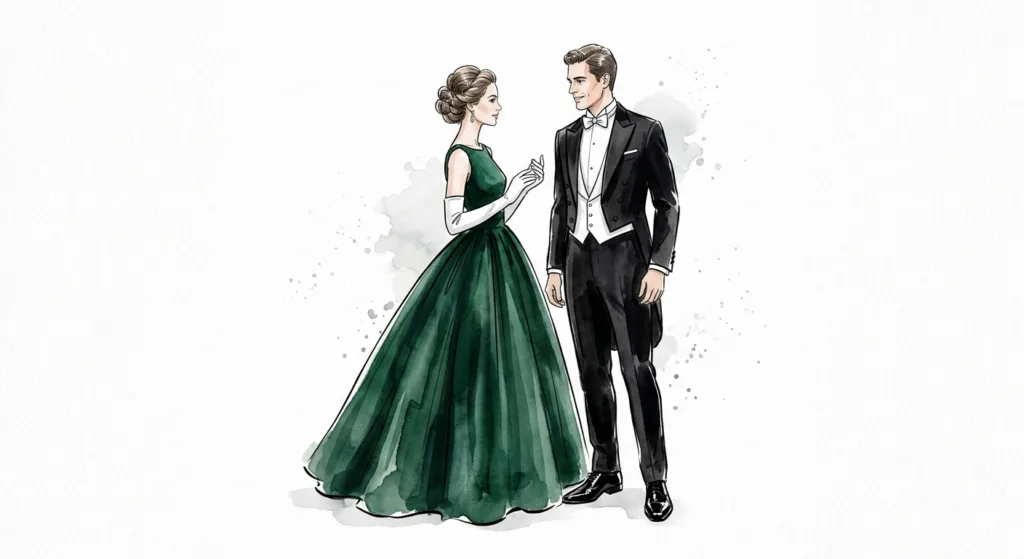 White Tie is the most celebratory, formal, and prestigious of all dress codes. While rarely encountered in day-to-day life, it is standard attire for galas, diplomatic affairs, and the most formal weddings. When it comes to this dress code, the rules are completely uncompromising.
What to Wear?
- For Women: A full-length, floor-sweeping grand ballgown. Fabrics must showcase premium quality, and the ensemble is frequently paired with opera-length gloves. The hair must be styled in an elegant, sophisticated updo (long hair should be pinned up). Wristwatches are traditionally avoided unless it is a diamond timepiece akin to fine jewelry.
- For Men: A black tailcoat with silk-faced lapels and a distinct double-tailed back. This is paired with a white piqué vest and a white bowtie. White gloves are also part of the uniform (worn outdoors and during formal dancing), completed with black patent leather dress shoes.


Sister Code: Similar, but Not Quite the Same
- Formal Attire / National Costume / Military Uniform: When an invitation specifies White Tie for men, it can almost always be substituted with other “grand formal attire”. For gentlemen, this translates to official military or diplomatic mess dress uniforms. Both men and women can always substitute a tailcoat or floor-length gown with an official, prestigious national costume, which represents the pinnacle of formal sartorial etiquette.
Summary and Frequently Asked Questions (FAQ)
Unsure about a specific style rule? Here are the answers to the most frequently searched dress code questions on Google:
- Can a woman wear a pantsuit if the dress code is Dark Suit?
Answer: Yes, absolutely! Modern etiquette allows women to wear a stunning pantsuit or an elegant jumpsuit crafted from festive materials (such as silk, satin, or velvet) to Dark Suit events. However, it must be distinctly elevated and easily distinguishable from casual, everyday office wear.
- Is it acceptable to wear a red dress to a wedding?
Answer: An old myth claims that wearing a red dress to a wedding implies the guest has slept with the groom. Today, red is a perfectly acceptable choice for wedding guests. Muted tones, such as burgundy or wine red, are elegant options. As a general rule, however, it is best to avoid overly bright, neon, or attention-grabbing shades to ensure the focus remains beautifully on the bride.
- How should I dress if traditional dress codes feel too gendered or don’t reflect who I am?
Answer: Traditional dress codes (such as white tie or lounge suit/dark suit) have historically been defined through men’s and women’s attire. Today, however, etiquette focuses primarily on the level of formality. The most important thing is to follow the formality specified in the invitation (for example, white tie indicates the highest level of formal dress, while a dark suit calls for elegant formal attire).
If traditional dress code guidelines don’t feel like a good fit, focus on the underlying principle:
Dress for the occasion: You can always interpret the level of formality in a way that reflects your own style. Draw inspiration from the traditional elements of the dress code and adapt them to suit your identity and personal expression. The key is to choose high-quality, formal fabrics and create a polished, well-finished overall look.
Don’t be afraid to mix and match: Modern etiquette allows for flexibility and personal expression. Feel free to combine different silhouettes, colours, fabrics and accessories in a way that reflects your style. Clothing and accessories do not need to express a particular gender—the most important thing is that your outfit matches the formality of the occasion and feels authentic to you.
- What should I do if the invitation features a self-invented theme (e.g., “Midsummer Magic”)?
Answer: Check the invitation to see if an official dress code (such as Dark Suit) is listed alongside the theme. If not, the theme usually guides the color palette and mood (such as pastels or floral prints) targeted at a Cocktail or Festive Attire level. When in doubt, asking the maid of honor or the host is always acceptable and highly encouraged!
- What should I do if the invitation does not mention a dress code?
Answer: When no dress code is specified, the host is relying on the guests’ situational awareness. You can determine the appropriate attire with these simple rules of thumb:
Evaluate the occasion and venue: Relaxed gatherings (e.g., housewarmings): Neat everyday attire (Casual). Formal celebrations (e.g., weddings): A suit for men, and a festive dress or elegant pantsuit for women (Smart Casual / Cocktail).
Consider the time of day: Generally, the later the event begins, the more formal the expected attire.
Don’t hesitate to ask the host: Inquiring is never embarrassing! Sending a quick message to ask if they have a specific style or code in mind is completely polite.
Opt for a safe middle ground: If you prefer not to ask, aim for the sweet spot between Smart Casual and Cocktail. A suit coat with a button-down shirt is a foolproof choice for men, while a beautiful midi dress or an elegant pantsuit works perfectly for women.