

A wool coat can cost less than €200 or well over €600, but the price tag alone does not tell you which one is the better buy. Likewise, seeing 100% wool on the care label does not automatically mean that a coat will be warmer, more durable or better made than a high-quality wool-blend coat.
When choosing a good wool coat, it is worth looking at the whole picture: the fibre composition, fabric construction, lining, cut, finishing and, above all, how you plan to wear the coat.
In this guide, we look at how to recognise a high-quality coat and how a wool coat should fit. We also compare different price ranges and explain how to care for a wool coat so that it stays looking good for as long as possible.
Choosing a wool coat – where should you start?
Before comparing materials, think about how you plan to wear the coat. Are you looking for a polished wool coat for commuting, a lighter option for autumn and spring, or the warmest possible coat for cold winter days?
The intended use will determine which features matter most.
For a lightweight transitional coat, a thinner fabric with a fluid drape may feel ideal. For colder weather, you may want to prioritise thermal insulation, wind protection and enough room for layering.
Length and silhouette matter too. A long coat covers more of the body, while a shorter style may feel more practical for driving, for example.
Once you know what you need from your coat, comparing materials and prices becomes much easier.
What is the best material for a wool coat?
Wool is a classic coat fabric for good reason. The natural crimp of wool fibres creates pockets of air between the fibres and yarns, which helps with insulation. Wool can also absorb moisture and has natural elasticity.
That does not, however, mean that the label always needs to say 100% wool.
Wool coats can be made from pure wool or from a variety of blends. Wool may be combined with fibres such as polyamide or polyester to achieve certain properties, including improved abrasion resistance, shape retention or a particular fabric structure.
For example, a composition of 80% wool and 20% polyamide can work very well in an everyday coat. The fibre percentages alone do not guarantee durability, however, as the quality of the fibres, yarns and finished fabric also plays an important role.
Wool-blend coats 🤍
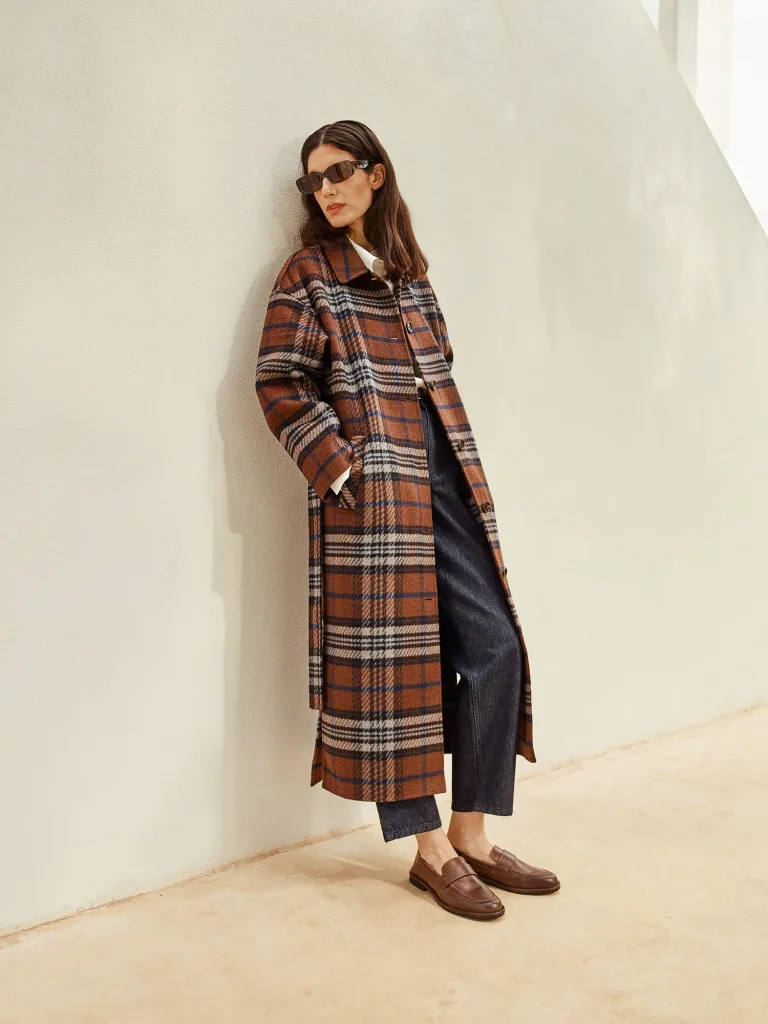
Nanso – Astrid Wool Coat
This statement checked wool coat adds personality to autumn and winter dressing. The long, straight-cut silhouette combines a button fastening and removable belt that can be used to define the waist. Its unlined construction makes it a lighter option. The fabric contains 70% wool and 30% polyester.
Regular price €295.99
Shop at Nanso
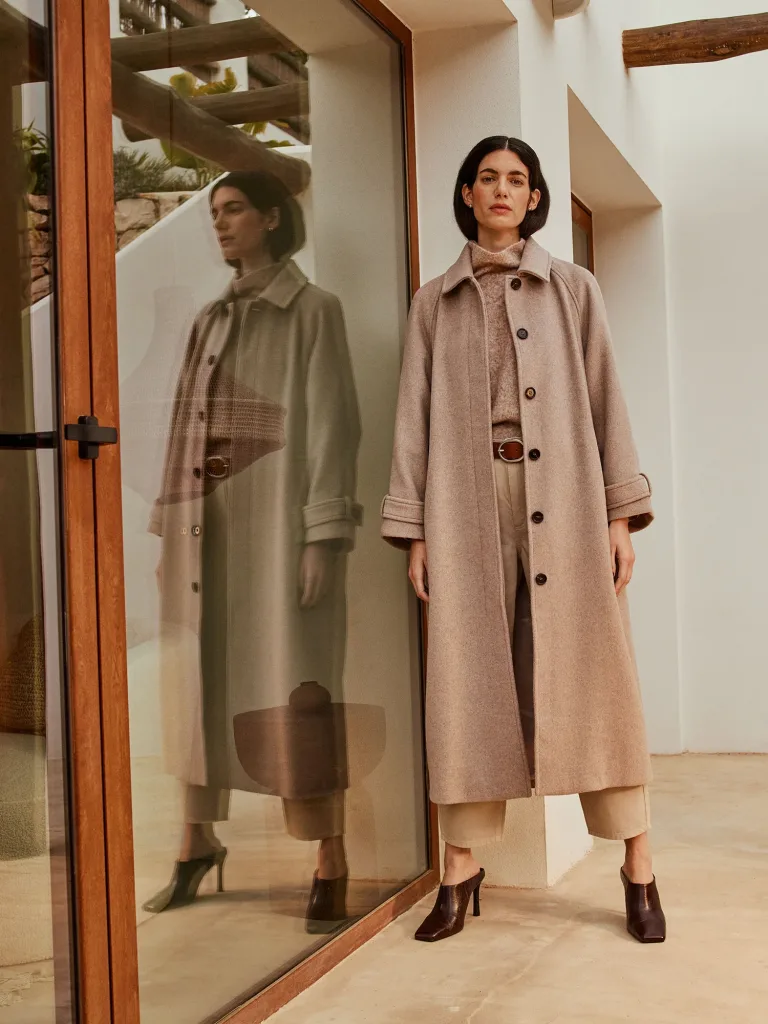
Nanso – Tove Long Wool Coat
A timeless beige wool coat with a relaxed, elongated silhouette that works equally well for everyday outfits and more polished looks. The design features raglan sleeves, concealed buttons and a back vent. The lined coat is made from 52% wool and 48% polyester, while the lining is a polyester-viscose blend.
Regular price €260.99
Shop at Nanso
How much wool should a wool coat contain?
There is no single percentage that automatically makes a coat high quality.
100% wool: The outer fabric is made entirely from wool, making it an appealing choice if you prefer natural fibres. Wool quality can vary considerably, however, so it is also worth looking at the thickness, construction, feel and finishing of the fabric.
70–90% wool: A high wool content is a strong starting point if you are looking for a good-quality everyday wool coat. It is still important to check which other fibres are included and how the finished fabric performs.
50–70% wool: Wool still makes up a significant proportion of the fabric, but the role of the other fibres becomes more important. A blend in this range can work very well for a transitional coat. Pay particular attention to the fabric construction, intended use and overall value for money.
Less than 50% wool: Other fibres make up the majority of the outer fabric. This does not automatically mean that the coat is a poor choice, but it is worth examining the composition more closely. Check which other fibres are used and whether their properties, as well as the coat’s price, match your expectations.
It is also worth remembering that two coats with the same wool percentage can perform very differently in terms of structure, warmth and durability. Two fabrics containing 80% wool may be completely different: one could be thick and tightly woven, while the other is lightweight and softly draped.
What does polyamide add to a wool coat?
Polyamide, also known as nylon, is a synthetic fibre used in textiles for qualities such as strength and abrasion resistance. In a wool blend, polyamide may be added to improve durability in everyday wear.
For this reason, a blend of 70–80% wool and 20–30% polyamide is not inherently a poor composition for a wool coat. However, the finished fabric is not automatically more durable than a 100% wool fabric. The result also depends on the fibres used, the yarn structure, the weave and the finishing.
What about polyester?
Polyester is a synthetic fibre commonly used in clothing for properties such as strength and resistance to creasing. In a wool blend, it can influence both the structure and performance of the fabric.
Adding polyester does not automatically make a fabric poor quality, but neither does it guarantee durability or resistance to pilling. Fabrics containing polyester can still pill, and in some constructions strong synthetic fibres may actually hold pills on the surface of the fabric for longer.
If a wool coat costs several hundred euros and a large proportion of the outer fabric is polyester, it is worth asking what else the higher price gives you, especially as polyester is a less expensive fibre than wool. Does the coat offer an exceptional cut, careful finishing, strong construction or a design you genuinely love?
Can you tell in advance whether a coat will pill?
Not with complete certainty. Pilling is a complex property. According to the international ASTM D4970/D4970M testing standard, it can be influenced by factors including fibre type and fibre blend, fibre dimensions, yarn and fabric construction, and finishing. Wear conditions also play a role.
This is why the fibre percentages alone cannot tell you how much a coat will pill. A very fuzzy or loosely structured fabric may raise questions about wear resistance, but appearance alone cannot reliably predict pilling. Even a high-quality wool garment may develop some surface fuzz or pills with use.
What about cashmere and alpaca?
Cashmere and alpaca are used in wool blends for qualities such as their feel and the distinctive character they can bring to a fabric.
Cashmere is known for its fine, soft fibres, but quality can vary. Fibre fineness and length, as well as the construction of the finished fabric, all affect the result. The softness and other properties of alpaca also vary depending on the fibre used.
Simply seeing cashmere or alpaca listed on the label does not tell you how the finished fabric will perform. The proportion and quality of the fibres, as well as the fabric construction, matter too. A 5% cashmere content can be an appealing extra, for example, but it will not necessarily make the coat noticeably softer or more luxurious.
Is a 100% wool coat always the best choice?
Not necessarily. 100% wool can be an excellent choice, but it is not an automatic mark of quality.
There are many different types of wool fibres, yarns, weaves and finishes. Fabric thickness, density and structure can make a significant difference to the final result. The cut and construction of the coat matter as well.
A thin or highly breathable 100% wool fabric may not insulate as effectively as a thicker, denser wool-blend fabric. Research into the thermal insulation of textiles has found that, in addition to fabric structure and air permeability, factors such as wind and the air layers trapped within clothing can affect insulation.
The idea that “the more wool, the better” is therefore too simplistic. Even so, 100% wool remains an appealing starting point if you value natural fibres and the fabric’s feel, construction, intended use and price all make sense for you.
Wool and wool-blend coats 🤍
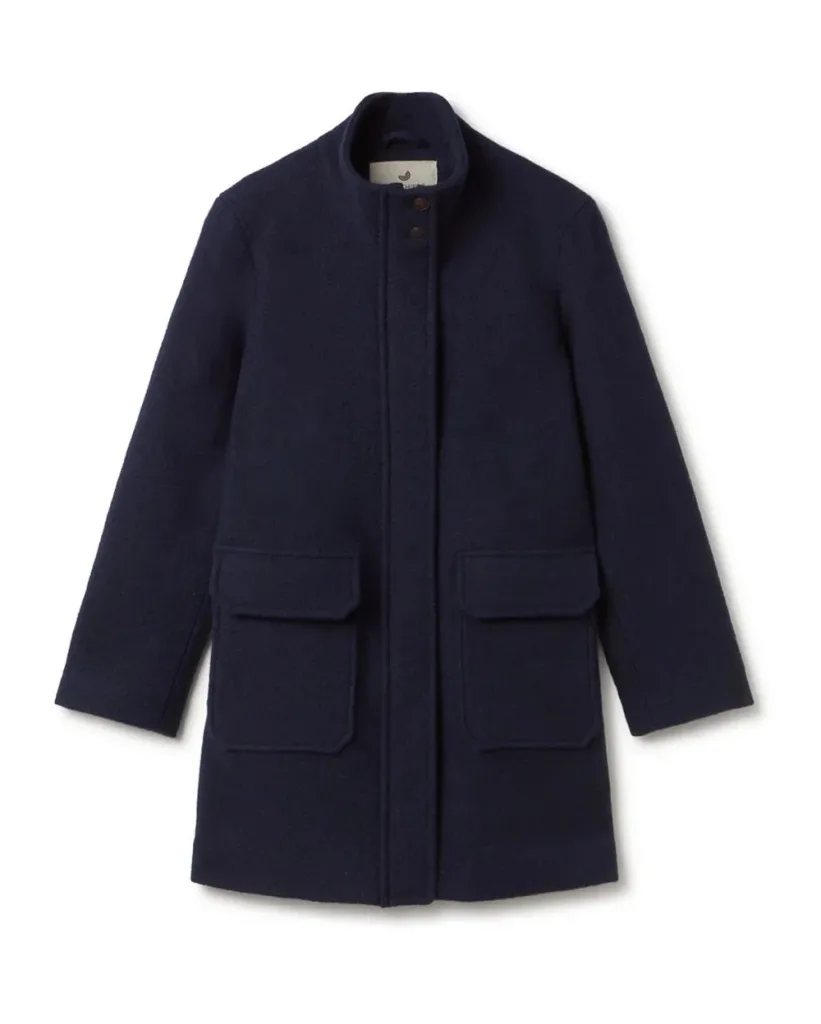
TWOTHIRDS – Farne Wool Coat
A stylish navy wool coat that combines a relaxed yet polished cut with practical details. The high collar, zip fastening and snap closures make it a versatile option for cooler weather. The outer fabric is 100% sheep’s wool, while the body lining is made from organic cotton and polyester.
Price €328.90
View at Ivalo
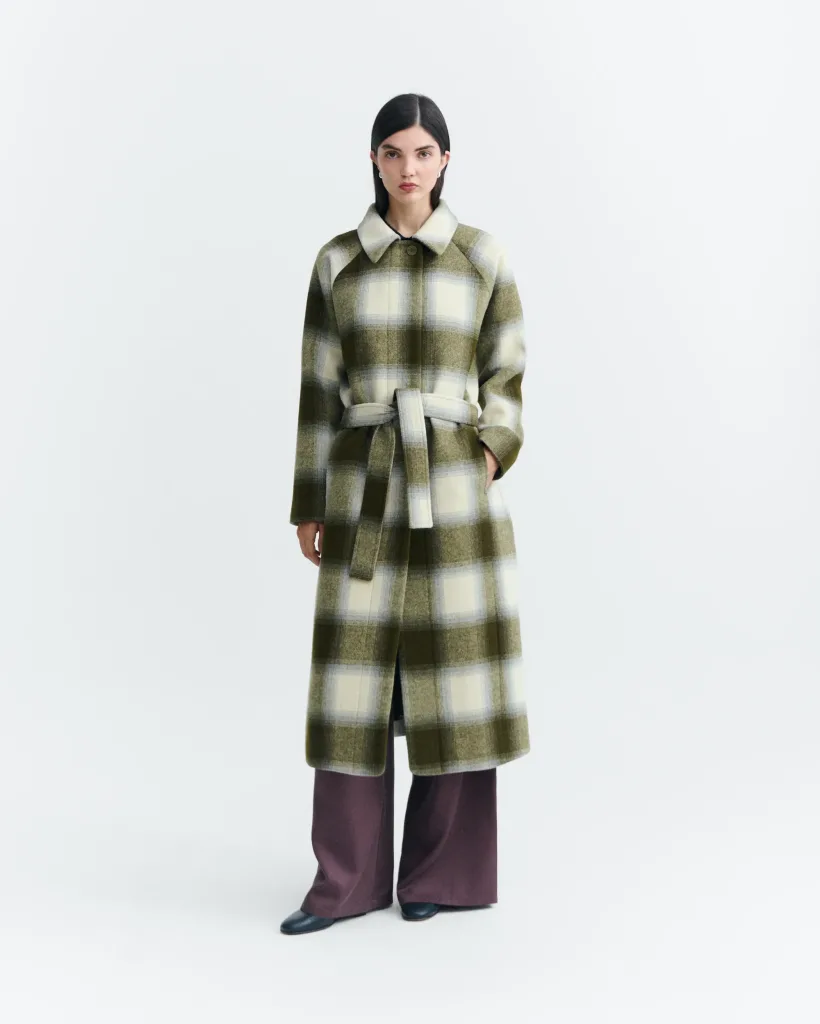
Thinking MU – Lise Wool Coat
This stylish checked wool coat brings personality to autumn and winter dressing. The long, relaxed silhouette features a shirt collar, raglan sleeves, concealed buttons and a removable belt for defining the waist. The lined outer fabric contains 50% sheep’s wool and 50% recycled polyester.
Price €340
View at Ivalo
How can you recognise a high-quality wool coat?
The care label only tells part of the story. A good coat is worth examining both by hand and on the body.
When shopping online
Here are the key details to check:
- the exact fibre composition of the outer fabric
- the lining material
- the coat length in centimetres, if provided
- the fit: regular, relaxed, oversized or slim
- whether the coat is fully lined, partially lined or unlined
- any certifications relating to material sourcing or production
- the care instructions
- detailed photographs of the collar, buttons, pockets and back of the coat.
It is particularly important to distinguish between the outer fabric and the lining. For example, a coat with a 100% wool outer fabric may still have a polyester lining.
If an online retailer simply describes a coat as a wool blend without specifying the exact composition, it is worth asking for more information before placing an order.
What do wool certifications actually tell you?
When browsing wool coats, you may come across certifications such as RWS (Responsible Wool Standard).
The RWS aims to promote animal welfare, responsible land management and the traceability of certified wool throughout the supply chain. The certification can therefore indicate that certain production-related requirements have been met, but it does not guarantee that a coat is warmer, more durable or better constructed.
It is always worth checking what a particular certification actually covers.
In the fitting room
Start by examining the fabric. It does not need to be perfectly smooth, but the surface should look well finished and complement the overall design of the coat.
Try gently squeezing a section of fabric in your hand before releasing it. Does it recover reasonably well, or does it retain a pronounced crease? This can give you an indication of how the coat might look after everyday wear, such as sitting for long periods or being folded.
Next, inspect the seams and lining. The stitching should look neat, and the lining should not pull the coat out of shape. Check the buttons too: do they feel securely attached?
The collar and front panels should fall naturally in a way that suits the design. If the fabric is already puckering or bunching when the coat is new, without an obvious design reason, it may be worth trying another size or style.
Pay attention to the areas around the pockets as well, as these are often exposed to repeated friction and stress during everyday wear.
Wool coat lining – a small detail that makes a difference
The lining makes a coat easier to put on, reduces direct friction between the inside of the outer fabric and the clothing underneath, and influences how comfortable the coat feels when worn.
Common lining materials include polyester, viscose, acetate and cupro. Their feel, smoothness and other properties depend not only on the fibre itself but also on the construction and finishing of the fabric.
The lining material alone does not determine quality. Instead, check that the lining:
- does not pull or restrict the outer fabric
- is neatly stitched and finished
- allows enough room for movement around the arms and shoulders
- makes the coat easier to slip on and off
- does not hang visibly below the hem
- feels comfortable over the clothes you would normally wear underneath.
An unlined coat can also be beautifully made. An unlined construction can work particularly well with softly draped fabrics and relaxed silhouettes. However, it will not offer the same smoothness or protection for the inside of the outer fabric as a fully lined coat.
Consider whether you are most likely to wear your coat over smooth office clothing, chunky knitwear or lighter everyday outfits.
How should a wool coat fit?
A good wool coat should look and feel right even when you are wearing your usual layers underneath.
If you plan to wear your winter coat over a chunky jumper, trying it on over a thin T-shirt will not give you a realistic idea of the fit.
1. Check the shoulders
On a classically tailored coat, the shoulder seam will usually sit close to the edge of your natural shoulder.
However, this rule does not apply in quite the same way to oversized styles or coats with dropped shoulders.
What matters more is whether the volume looks intentional and whether the coat remains comfortable when you move.
2. Fasten the coat
Button or zip the coat all the way up.
The front panels should not pull noticeably across the bust or hips, and the collar should not ride up or fold awkwardly.
If you intend to wear the coat through chilly autumn and winter weather, it needs to look and feel good when fully fastened, not just when worn open.
3. Move your arms
Raise your arms in front of you, cross them as though giving yourself a hug, and try reaching forward.
A thick, non-stretch wool fabric may not allow quite the same freedom of movement as a stretch fabric, but you should still be able to move comfortably without significant pulling or tightness.
Pay particular attention to the shoulders, upper back and underarm areas.
4. Try it on over knitwear
If you regularly wear chunky knitwear in winter, make sure to try the coat on over something similar. A coat that is too tight can restrict movement and leave insufficient room for comfortable layering.
On the other hand, an extremely loose coat is not automatically the warmest option, as air movement within clothing can influence thermal insulation.
5. Check the sleeve length
On a classic coat, the sleeves should generally cover your wrists when your arms are resting naturally at your sides.
Sleeves that are too short can leave your wrists exposed to the cold, while excessively long sleeves may become impractical.
The ideal sleeve length also depends on the design. Relaxed or deliberately oversized coats may feature longer sleeves as part of their intended silhouette.
What length wool coat should you choose?
The length of a wool coat affects its overall style, freedom of movement and how much of your body it protects from the cold.
A short wool coat can be a practical choice for driving and transitional weather. However, it leaves more of your legs exposed to the elements.
A thigh-length coat offers a good compromise if you want a little more coverage without committing to a long hemline. It can also be a versatile everyday option.
A knee-length coat works with a wide range of outfits, from tailored workwear and straight-leg trousers to dresses.
A long, midi or maxi wool coat provides more coverage for the legs and can look particularly elegant in cooler weather. However, a long hem may feel less practical when you are on the move or dealing with wet, slushy conditions.
If you are looking for one wool coat to wear in as many situations as possible, a style that falls around the knee or just below it is often a versatile choice. Ultimately, though, the ideal length comes down to personal style and how you intend to wear it.
How warm is a wool coat?
The wool percentage tells you about the fabric composition, not directly how warm the coat will be.
Several factors influence warmth, including:
- the thickness and construction of the fabric
- the fabric’s air permeability
- the length of the coat and how much of the body it covers
- how securely the collar and front fastening close
- the lining and any additional structural layers
- the amount of ease in the cut and the overall fit
- how easily wind can enter the coat
- the clothing layers worn underneath.
Wool’s natural properties make it an appealing material for cold-weather clothing, but two wool coats can differ significantly in warmth. A thin 100% wool coat, for example, may not be warmer than a thicker, more densely constructed wool-blend coat.
It is also worth remembering that not every wool coat is designed for freezing temperatures. An open collar, lightweight fabric and wind-permeable construction may make an elegant wool coat ideal for autumn or milder winter days, while a properly insulated coat designed for harsh weather may be a more practical choice in severe cold.
There is no universal temperature below which a wool coat becomes unsuitable. Wind conditions, activity level, layering and individual tolerance to cold all make a difference.
Is it worth paying more for a wool coat?
Yes, provided the higher price offers something you genuinely value. The cost of a wool coat can be influenced by factors such as the materials, fabric production, cut, construction, craftsmanship, manufacturing process, design and brand.
However, a higher price does not guarantee a higher wool content, just as a high wool percentage alone does not guarantee quality. Wool is generally a more expensive fibre than polyester, for example, which means that a higher wool content will often contribute to a higher price. This is why it makes sense to compare different price ranges according to your own needs and expectations.
Under €150 – affordable wool-blend coats
There is a wide selection of wool-blend coats available for under €150, but it is especially important to pay attention to the fabric composition. At this price point, synthetic fibres can make up a significant proportion of the material, and some coats marketed as wool coats contain relatively little wool.
That said, it is also possible to find coats containing around 50% wool in this price range. Price alone is therefore not a reliable indicator of material quality.
When choosing an affordable wool coat, consider its intended use. Are you looking for a stylish transitional coat or something that will keep you as warm as possible during winter? Alongside the fibre composition, examine the fabric construction, fit and finishing.
Seasonal sales can also offer interesting finds, including coats that originally belonged to a considerably higher price category.
Wool coats under €150 🤍
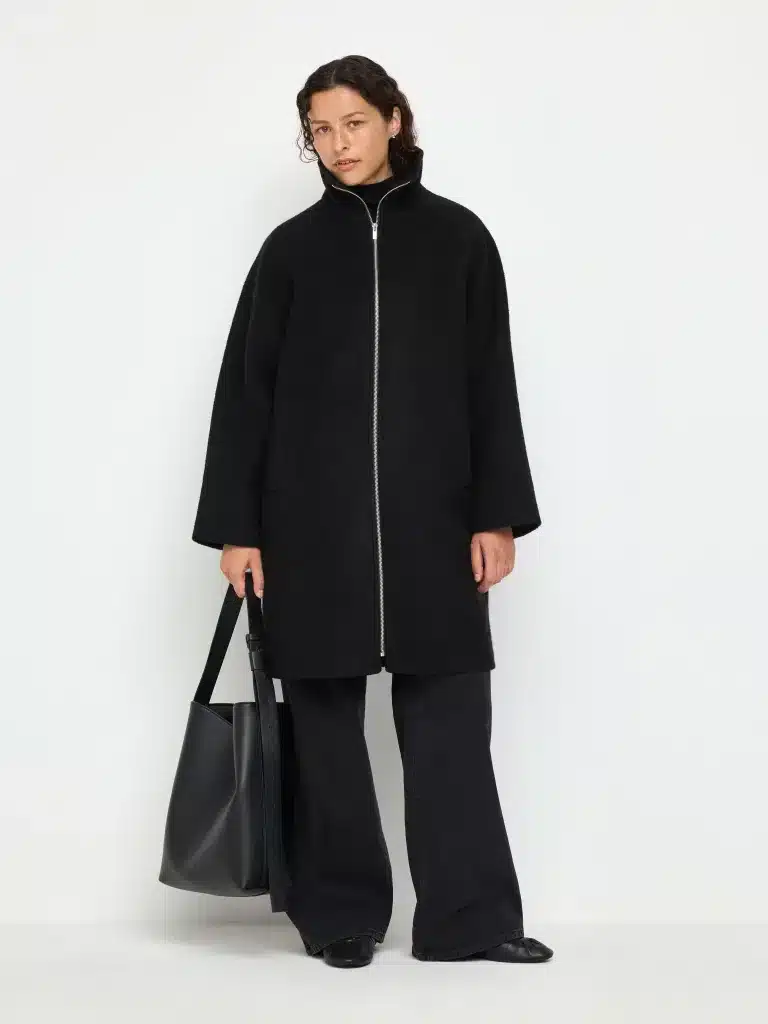
Lindex – Black Wool-Blend Coat
A stylish black wool-blend coat combining a clean, streamlined silhouette with a high collar and practical zip fastening. The lined design falls to approximately knee length, making it a versatile choice for everyday wear. The outer fabric contains 57% wool and 43% polyester.
Price €119.99
View at Lindex
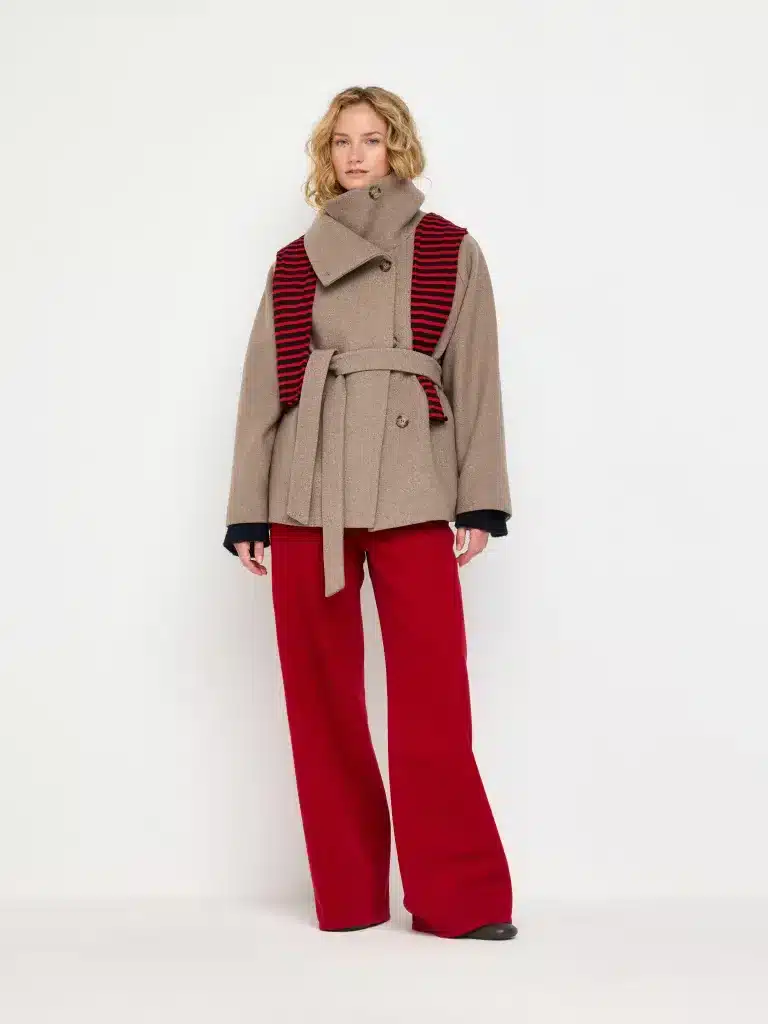
Lindex – Short Beige Wool-Blend Coat
This light beige wool-blend coat offers an elegant alternative to the traditional long wool coat. The design features a tie belt, button fastening and a versatile collar that can be worn either raised or folded down. The outer fabric contains 51% wool and 45% polyester, along with a small proportion of other fibres.
Price €119.99
View at Lindex
€150–€300 – a versatile selection of wool blends
The €150–€300 price range is an interesting place to look if you want to invest in a wool coat without committing to a premium budget.
You can find long, fully lined wool-blend coats with carefully considered cuts and polished designs. However, a higher price does not necessarily translate into a higher wool content. Even coats costing more than €250 may contain almost 50% polyester or other fibres.
At this price point, it is particularly worth comparing the fibre composition, feel of the fabric, fit and overall construction. Two coats that look very similar may differ considerably in quality and performance, even when their prices are almost identical.
If a high wool content is your priority, do not assume that a higher price guarantees it. Always check the material composition of each coat individually.
Wool coats from €150 to €300 🤍
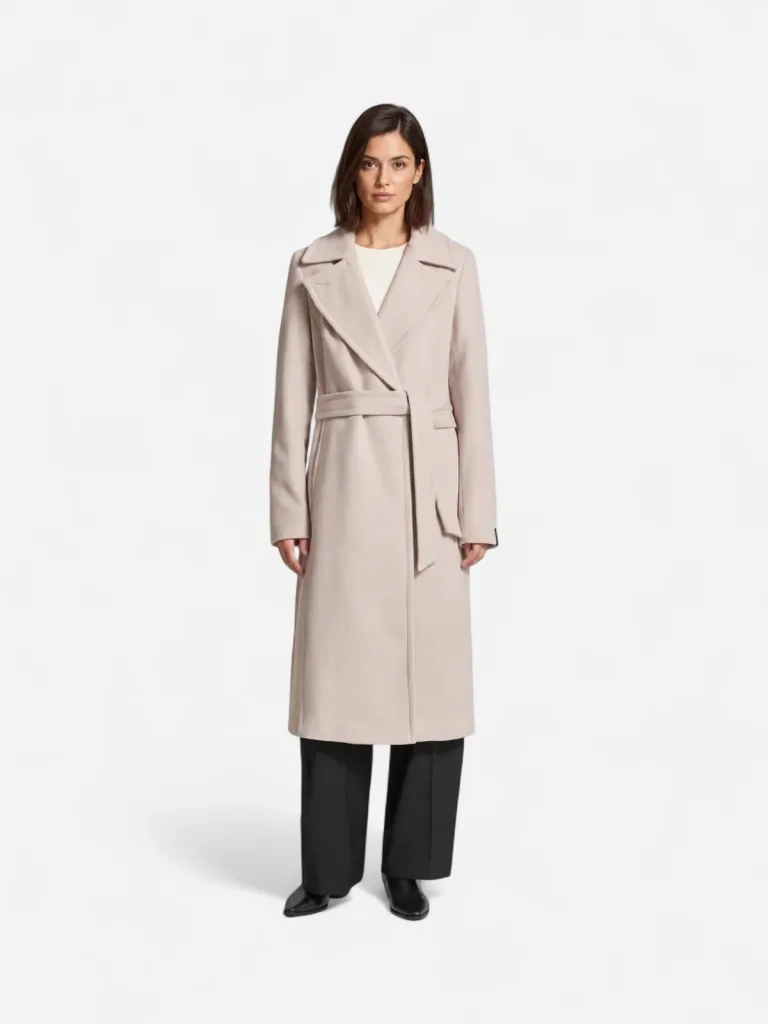
Milo Coats – Wanda Wool Coat
An elegant wool coat in a soft stone-beige shade, combining a classic silhouette with wide lapels and timeless appeal. The design works equally well with casual everyday outfits and more sophisticated looks. The fabric composition is particularly interesting: 70% wool, 20% polyamide and 10% cashmere. The coat has a polyester lining.
Price €289.99
Shop at Kekäle
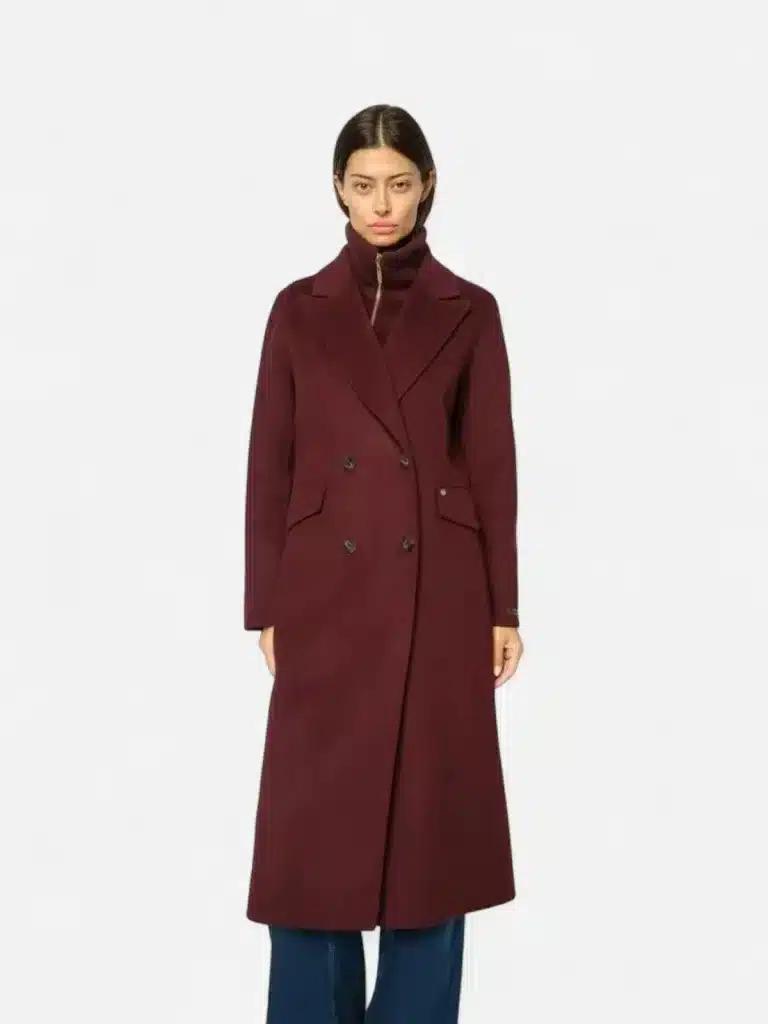
Mos Mosh – Alva Loisa Mock Neck Coat
A striking burgundy wool coat that adds character to autumn and winter wardrobes. The long, straight-cut silhouette combines classic double-breasted fastening and lapels with a contemporary mock-neck detail. The unlined fabric contains 60% wool, 30% polyester, 5% lyocell and 5% other fibres.
Price €299.90
Shop at Kekäle
€300–€500 – higher expectations for materials and craftsmanship
Once a wool coat costs more than €300, it is reasonable to expect a clear return on your investment. This might mean a high wool content, a distinctive fabric construction, an exceptionally well-executed cut or particularly careful finishing.
In this price range, it is worth exploring both high-wool-content blends and coats made entirely from wool. Not every coat at this price point will meet those criteria, however, and a higher wool percentage alone does not guarantee superior quality.
Pay particular attention to what you are getting beyond the fabric itself. How well does the coat fit? How carefully has it been made? Do its features suit the way you intend to wear it?
Design and brand positioning can also influence the price, so comparing styles from different manufacturers is worthwhile.
Wool coats from €300 to €500 🤍
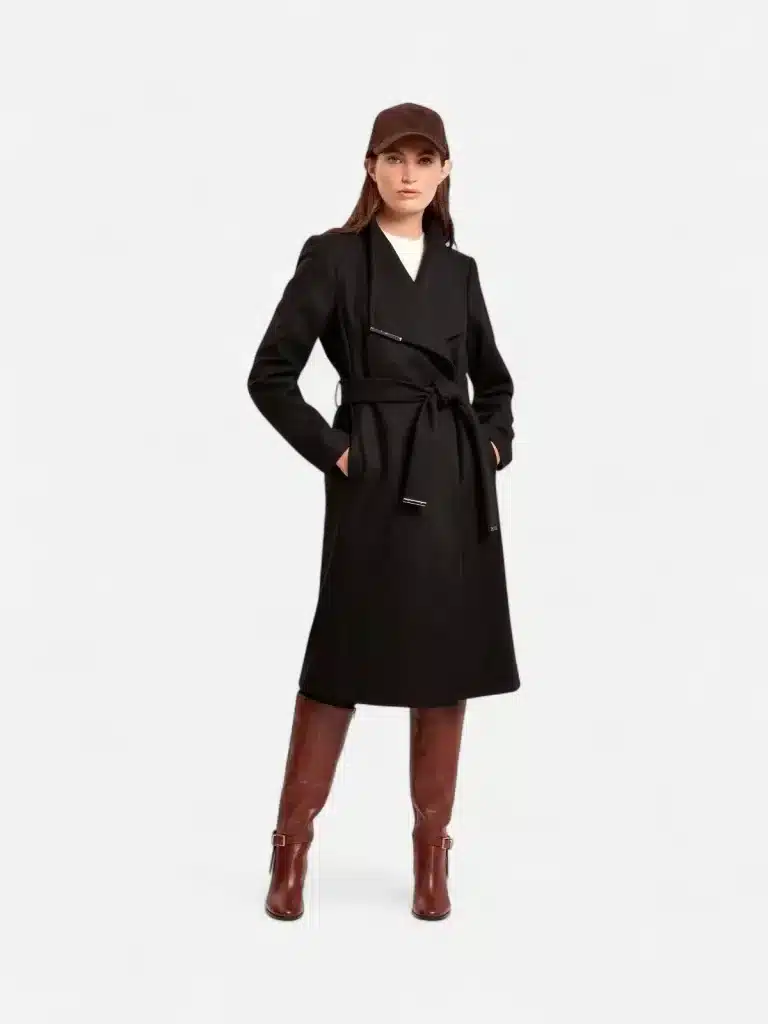
Ted Baker – Rose Mid Length Belted Wool Coat
An elegant black wool coat featuring a timeless wrap-style silhouette, a high fold-over collar and a tie belt that accentuates the waist. The midi-length design works beautifully for both everyday dressing and more formal occasions. The outer fabric contains 69% wool, 25% polyamide and 6% cashmere. The lining is made from viscose and acetate, with polyester used in the sleeves.
Price €459.99
Shop at Kekäle
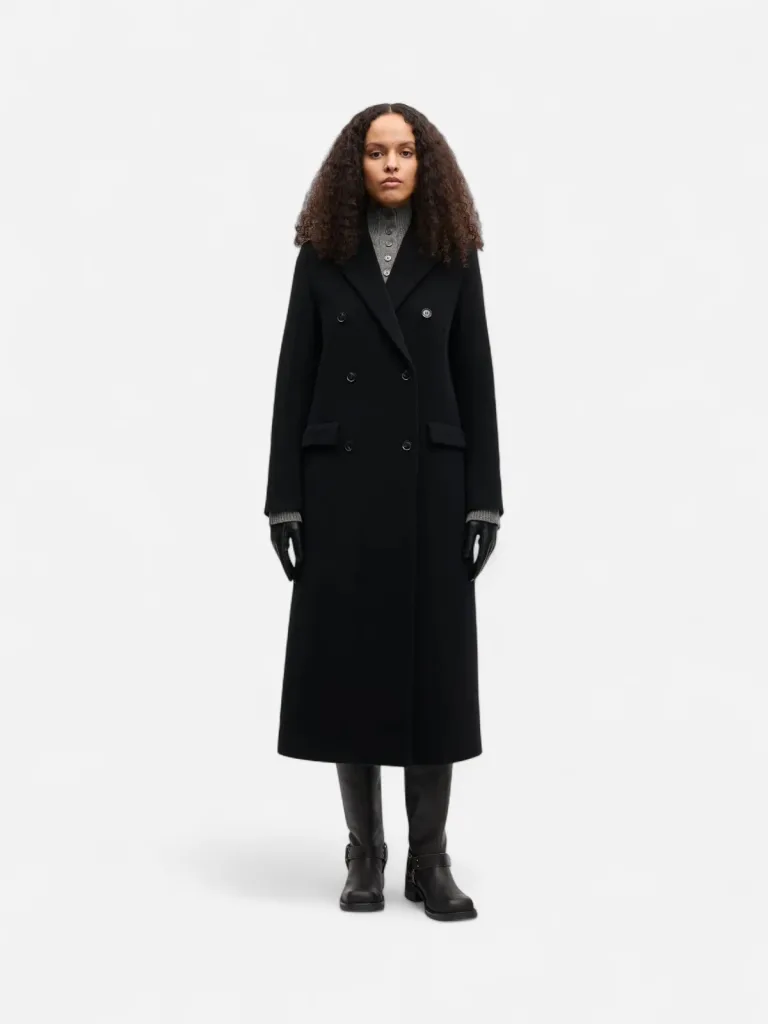
Samsoe Samsoe – Wool Coat
The Falcon Coat by Samsøe Samsøe combines timeless Scandinavian minimalism with a sophisticated, modern silhouette. The outer fabric, woven in Italy, contains 74% recycled wool, 11% recycled polyamide and 11% recycled polyester, with a fully lined viscose interior for added comfort. Its versatile design makes it an elegant choice for both everyday wear and more polished outfits.
Price €399.99
Shop at Northoutdoor
Over €500 – premium wool coats
For a wool coat costing more than €500, it is reasonable to expect high-quality materials, meticulous finishing and a well-considered cut. With a budget at this level, it is worth exploring particularly fine wool fabrics, including coats made entirely from wool or blends containing luxurious fibres such as cashmere.
The premium category may also introduce more distinctive fabric qualities, specialist finishes and construction techniques that influence both the appearance and feel of a coat.
However, a premium price tag does not guarantee a high wool content or an exceptionally long lifespan. Part of the cost may also reflect the brand, design or positioning of the collection.
Even when investing in an expensive wool coat, it is therefore worth examining the fibre composition, fabric construction and finishing just as carefully as you would with a more affordable option.
Ideally, the benefits of a higher-quality coat should still be evident after years of wear. The price tag alone, however, is no guarantee.
Wool coats over €500 🤍
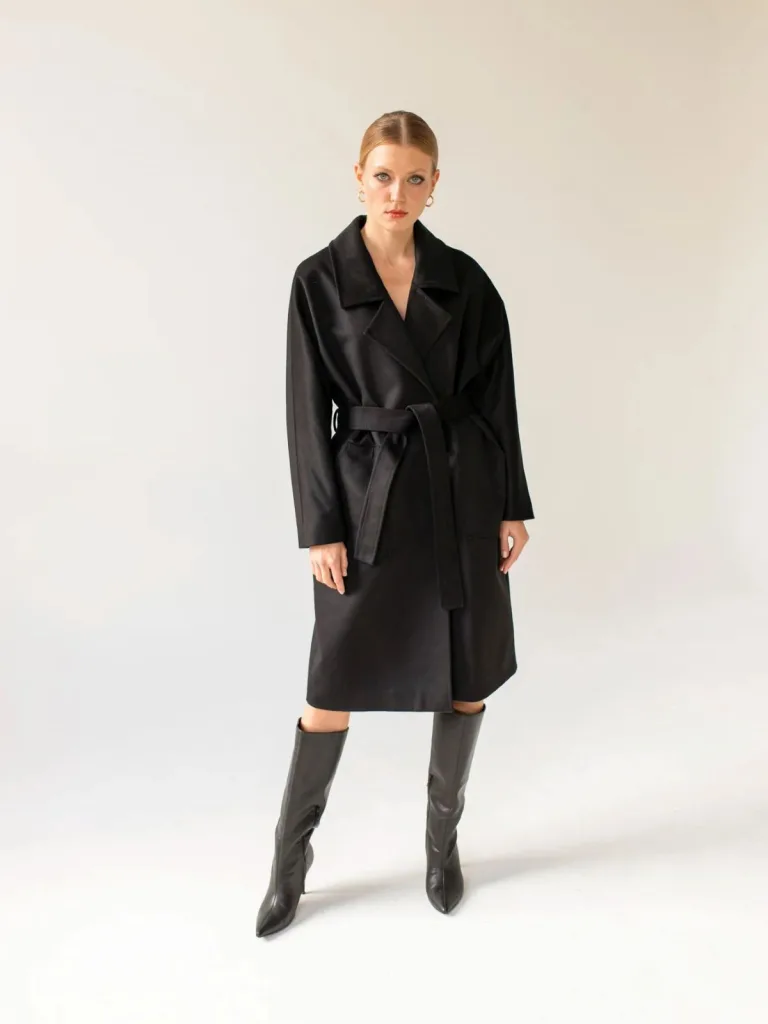
Enteliér – Oversized Cashmere Wool Coat
A luxurious black wool coat combining a relaxed oversized silhouette, generous kimono-style sleeves and a waist-defining tie belt. Refined decorative stitching and a softly lustrous fabric complete the timeless look. Its material composition is particularly appealing: 70% virgin wool and 30% cashmere, with a viscose lining.
€599.90
Shop at Ivalo
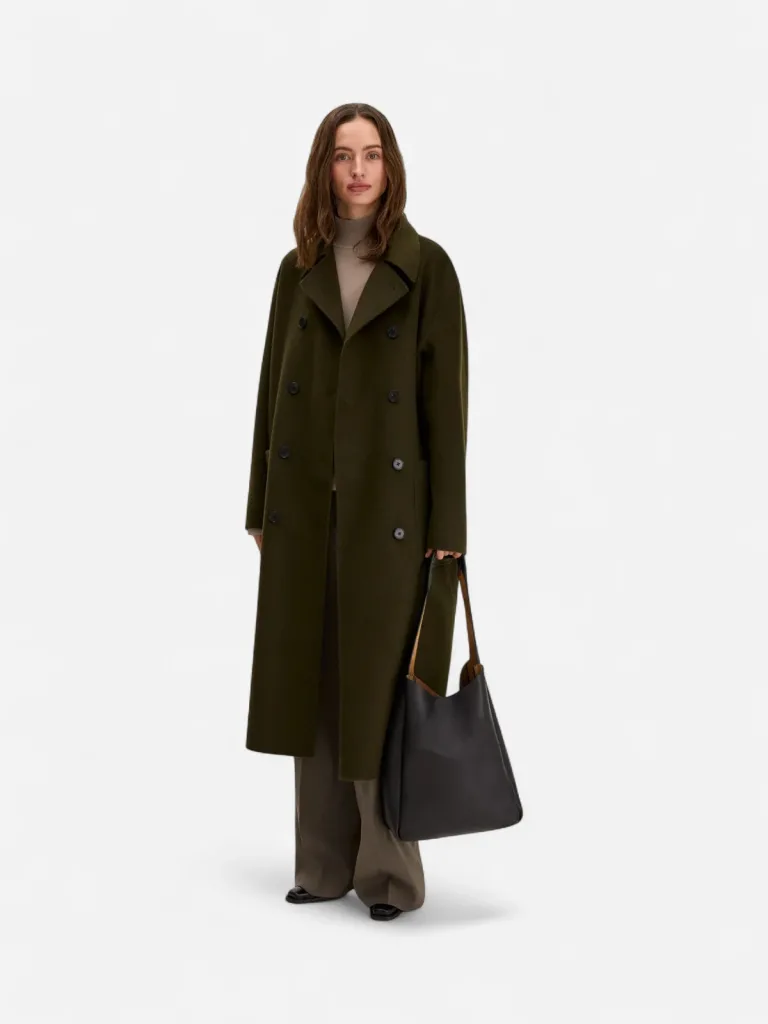
Filippa K – Amelia Doublé Wool Coat
A sophisticated dark green wool coat that blends Scandinavian minimalism with a relaxed oversized silhouette. The long design features double-breasted fastening, generously sized pockets and a softly brushed wool surface. The rich green shade adds a distinctive touch to an otherwise timeless design. The fabric is 100% wool.
Price €889.99
Shop at Kekäle
How to care for a wool coat so it lasts longer
Even a well-made wool coat’s appearance and lifespan depend partly on how you care for it. Wool does not necessarily require frequent washing. In many cases, airing and gentle surface cleaning are enough to keep a coat feeling fresh.
In its wool care guidance, The Woolmark Company recommends practices such as airing wool garments and gently brushing woven wool fabrics.
Air your coat after wearing it
If your coat is not visibly dirty but has absorbed odours, such as cooking smells, airing it may help. A woven wool coat can be hung in a suitable, well-ventilated place on a sturdy hanger.
Brush the fabric when needed
A soft clothes brush can help remove dust and loose dirt from the surface of wool fabric. Brush gently, following the direction of the fabric’s surface. Avoid vigorous rubbing, particularly on delicate or very fluffy wool fabrics.
Always follow the care label
Not all wool coats can be cleaned in the same way.
Although wool fibres themselves may tolerate certain washing methods, a finished coat can contain linings, interfacing and other structural components that affect how it should be cleaned and maintained.
Always check the coat’s individual care instructions before washing it or treating stains. If the garment requires professional cleaning, it is best not to attempt washing it at home based solely on the fibre composition.
Store your coat properly
Empty the pockets and fasten the buttons before putting your coat away for an extended period to help it retain its shape. Choose a hanger that provides adequate support for the coat’s weight and shoulder structure. Make sure the coat is clean and completely dry before storing it for a longer period.
Wool garments should also be protected against fabric pests. A protective garment bag or suitable moth deterrents may be useful, particularly if you have encountered moths before.
A few simple care habits can make a significant difference to how well your wool coat maintains its appearance year after year.
Buying a wool coat? Check these 7 things first
Have you found a wool coat you love but are unsure whether it is good quality? Before making your decision, take a moment to check these seven details.
- Look at the entire fabric composition. Do not focus solely on the wool percentage. Check the other fibres and lining material too. What are these fibres, and what purpose do they serve in the fabric?
- Feel the fabric. Do its thickness, construction and finish seem appropriate for how you intend to wear the coat?
- Try it on over your usual winter layers. A chunky jumper can make a considerable difference to how a coat fits.
- Fasten all the buttons or zip. Check that the coat does not feel tight or pull noticeably across the bust or hips.
- Move your arms. Make sure there is enough freedom of movement around the shoulders and upper back.
- Inspect the finishing. Examine the seams, lining, buttons, collar and pocket attachments.
- Consider what you are paying for. Does the price reflect suitable materials, a well-executed cut and careful construction, or are you primarily paying for a particular brand or design?
If the coat’s features do not seem to justify its price, it is worth comparing a few more options before making a purchase.
Frequently asked questions about wool coats
How much wool should a good wool coat contain?
There is no single ideal percentage. Generally, around 70–90% wool is a good starting point if you are looking for an everyday coat with a high wool content and the potential for good durability. A 100% wool coat can also be an excellent choice, but make sure the fabric feels well made and is suitable for your needs. Wool fibres and fabric constructions can vary considerably in quality and performance.
Is 100% wool better than a wool blend?
Not automatically. A 100% wool fabric contains only wool fibres, while blends may incorporate materials such as polyamide or polyester to achieve particular performance characteristics. Durability, warmth and comfort also depend on the fabric construction and finishing.
Is polyester a bad material in a wool coat?
Not inherently. Polyester has properties that can be useful in wool blends. However, its proportion should be considered in relation to the coat’s price and intended use. A high polyester content does not automatically mean poor quality, but it reduces the proportion of wool and can change the fabric’s overall character, performance and appearance.
Why does my wool coat pill?
Pilling occurs when loose fibres on the surface of a fabric become entangled through friction, forming small balls or pills. It is influenced by factors including fibre characteristics, yarn and fabric construction, finishing and conditions of wear. The wool percentage alone cannot reliably predict how much a fabric will pill. A wool comb can help remove pills and keep the surface looking neat.
Is a wool coat warm enough for winter?
It depends on the coat, the weather and what you wear underneath. A thick, densely constructed wool coat with a secure fastening can be suitable for many winter days, while a lightweight or wind-permeable style may offer insufficient protection in freezing temperatures. Wool content alone does not determine a coat’s thermal insulation.
How should a wool coat fit?
A wool coat should fasten comfortably and allow sufficient room for movement around the shoulders, bust and back. On a classically tailored coat, the shoulder seam will usually sit close to the natural edge of the shoulder. In oversized styles, extra volume and a dropped shoulder line are intentional elements of the design.
Should I buy a wool coat in a slightly larger size?
If you plan to wear your coat over chunky knitwear, it should have enough room for comfortable layering. However, there is no need to automatically size up. The aim is to find a coat that fits comfortably over your usual clothing while maintaining the silhouette you want.
How much should you spend on a good wool coat?
There is no single price that defines a good wool coat. An affordable coat can be an excellent purchase, while a higher price may reflect not only the materials but also design, manufacturing or brand positioning. Always consider the coat’s features and intended use in relation to its price.
Final thoughts: how to choose a good wool coat
Choosing a good wool coat is about looking at the whole picture. The fibre composition is a useful starting point, but it does not tell you everything about the coat’s warmth, durability or overall quality.
Pay attention to the fabric’s thickness, construction, cut, fit and finishing. Most importantly, think about the weather conditions in which you will wear the coat and the clothing you plan to layer underneath.
The best wool coat is not necessarily the most expensive one or the one with the highest wool content. It is the coat whose materials, construction, fit and price suit your needs – and one you will still be happy to reach for in years to come.
Sources and further reading
The following sources were consulted when preparing this article:
- The Woolmark Company – Wool is naturally breathable. Information on the natural properties of wool fibres, including moisture absorption and breathability.
- The Woolmark Company – Caring for wool. Guidance on caring for wool garments, including airing, cleaning and storage.
- ASTM International – ASTM D4970/D4970M. A standard used to test fabric pilling resistance, with information on factors that influence pilling.
- Regulation (EU) No 1007/2011 of the European Parliament and of the Council. EU legislation governing textile fibre names and the labelling of fibre composition for consumers.
- Textile Exchange – Responsible Wool Standard. Information on RWS certification, covering areas such as animal welfare, land management and wool traceability.
- Zare, A. (2018) – Influence of Structural Parameters on Abrasion Resistance of Wool/Polyester Fabrics. Research examining abrasion resistance in wool-polyester fabrics and the influence of fibre composition and fabric structure.
- Elshakankery, M. H. (2008) – Pilling Resistance of Blended Polyester/Wool Fabrics. A research article on pilling in polyester-wool blends and the effects of fibre characteristics, yarns and fabric construction.
- Gupta, A., Bajya, M., Choudhary, A. K. & Jajpura, L. – Influences of Process Parameters on Thermophysiological Comfort of Mechanically Recycled PET and Wool-blended Woven Fabrics. Research investigating how recycled polyester-wool blend ratios and yarn construction influence the thermal properties of fabrics.