
What should you wear to the office when there is no longer a clearly defined dress code? One day, jeans may be a perfectly appropriate choice; the next, you may have an important client meeting where your outfit calls for a little more polish. Workplace dress has become more relaxed, but a smart, put-together style is still an important part of many people’s working day.
In this article, we’ll walk through the steps to building a stylish and functional office wardrobe. You’ll discover what modern office dressing looks like in different workplaces and how to create versatile outfits from a few carefully chosen wardrobe essentials. We’ll explore the role of colours, accent shades and quality materials, as well as weather-appropriate style solutions for everything from summer heat to freezing winter days. You’ll also get three questions to ask before making a purchase you might regret, tips for finishing an outfit with small details, and answers to the most common questions about office attire.
Office dressing is more relaxed — but still polished
Traditionally, office attire meant a suit, a collared shirt and smart shoes. Today’s work wardrobe is usually much more flexible.
With fewer strict dress codes, there is more freedom to dress in your own way and combine style, comfort and practicality. A blazer does not have to feel stiff, tailored trousers do not have to look overly formal, and a polished work outfit should not have to feel uncomfortable. At its best, office dressing is a combination of sophistication, comfort and personal style.
A good office wardrobe does not have to mean owning a huge number of clothes. With a few well-chosen essentials that work easily together, you can create countless different outfits. When colours, fabrics and cuts complement one another, getting dressed becomes easier — and you get much more out of your wardrobe.
Smart casual is a natural starting point in many workplaces. In practice, it means combining polished pieces with relaxed ones: wear jeans with a blazer, pair tailored trousers with a knit, or style loafers just as easily with a dress as with trousers.
The boundaries between workwear and everyday clothing have also become less distinct. Classic workwear is no longer reserved for the office; these pieces are now part of everyday wardrobes too. That makes them particularly smart purchases, since the same garment can serve several purposes.
The most important thing, however, is to consider your workplace culture. What works in a creative industry may not be appropriate in a law firm or a highly formal client-facing environment.
A simple rule of thumb works especially well when starting a new job: if you are unsure, it is better to be slightly overdressed than too casual. You can always add more personality later with colour, accessories and other details.
What does a functional office style look like?

A stylish work outfit does not mean every piece has to be as classic as possible. Often, the most interesting looks come from finding the right balance.
For example, combine:
- a relaxed knit with tailored trousers,
- a blazer with dark jeans,
- a feminine blouse with tailored trousers,
- a satin or wool skirt with a soft knit.
The idea is for the outfit to look considered and polished, without making you look as though you are dressed for a formal occasion.
A good work outfit should also feel like you. If you do not normally wear dresses, there is no need to buy them simply because they are part of a traditional work wardrobe. The same goes for heels and button-down shirts. A functional wardrobe should suit your personal style rather than forcing you to dress in a way that feels unnatural.
Soft tailoring makes workwear feel modern
Blazers and tailored trousers are timeless, but they do not have to be stiff or overly formal. Relaxed cuts, soft fabrics and a slightly looser fit make classic workwear feel more approachable. Wide-leg trousers are also a great option if you want a more modern silhouette.
It is important, however, to distinguish relaxed tailoring from looking careless. The trouser length, waistband and blazer shoulder line should all be right, even when the garment itself has a loose fit. A well-fitting garment almost always looks more polished than a trendy piece that fits poorly.
Colours: build a versatile base and add accent shades
The colour palette of a classic office wardrobe is built around neutral shades. They stand the test of time, always look polished and, most importantly, work seamlessly together, making getting dressed much easier.
Navy: For many, the ultimate go-to colour for professional dressing. It is slightly softer against the face than black, while still looking professional and being easy to combine.
Grey: Shades ranging from deep charcoal to light grey are incredibly versatile. Grey is a perfect, sophisticated base colour.
Black: Graphic, elegant and a safe choice. A black blazer, trousers and shoes are timeless wardrobe favourites.
White and cream: They brighten up darker outfits. Classic crisp white or softer off-white work beautifully in shirts and blouses.
Beige and camel: They add warmth to an outfit. Camel brown, for example, looks elegant in trench coats, knitwear and bags.
An office wardrobe does not have to consist of nothing but black and grey. Neutrals are an easy foundation, but you can complement them with warm, rich or lighter shades. Good accent colours include forest green, burgundy, light blue and muted pink.
A simple rule works well as the foundation of your entire work wardrobe: choose shades that are easy to combine. When most of your clothes follow the same colour palette, they are easier to mix and match — and new purchases are more likely to earn their place in your wardrobe.
Fabrics make more of a difference than you might think
A garment’s appearance is influenced not only by its cut, but also by its fabric. Soft wool, cotton, linen, silk and high-quality blends give an outfit a premium feel and beautiful drape. Quality materials also withstand wear and can remain wardrobe favourites for years.
Wool and wool blends work well for knitwear, blazers and trousers. Cotton is ideal for shirts, blouses and lighter garments. Silk and satin add a touch of sheen and movement, while linen and linen blends are excellent for warm days.
Combining different fabrics can also make a simple outfit more interesting. A soft knit paired with a smooth satin skirt, for example, creates a beautiful contrast. Wool trousers and a silk blouse work in much the same way.
It is also worth considering fabrics from a practical perspective. A beautiful blouse that wrinkles easily may not be the best choice if your working day involves a long commute or lots of movement. Good workwear should still look good at the end of the day.
Build a functional work wardrobe with these essentials
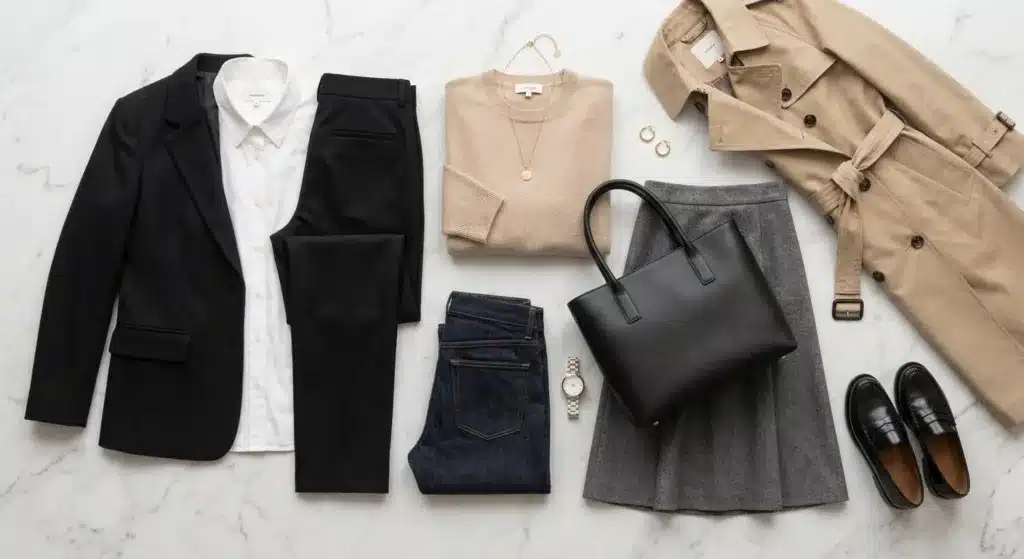
You do not need to buy everything at once. A better approach is to build your wardrobe gradually, starting with pieces you can wear in as many different ways as possible.
1. A well-fitting blazer
A blazer is one of the most versatile pieces in an office wardrobe. It works with tailored trousers, jeans, skirts and dresses.
For your first blazer, choose a shade that works with as many of the clothes you already own as possible.
2. Smart trousers
A good pair of trousers forms the foundation for countless work outfits. Black, grey, beige and dark brown are easy options, but you can also choose a colour based on the rest of your existing wardrobe.
Fit matters more than trends. Good trousers are ones you can sit, move and work in comfortably all day. Choose a cut that suits your personal style.
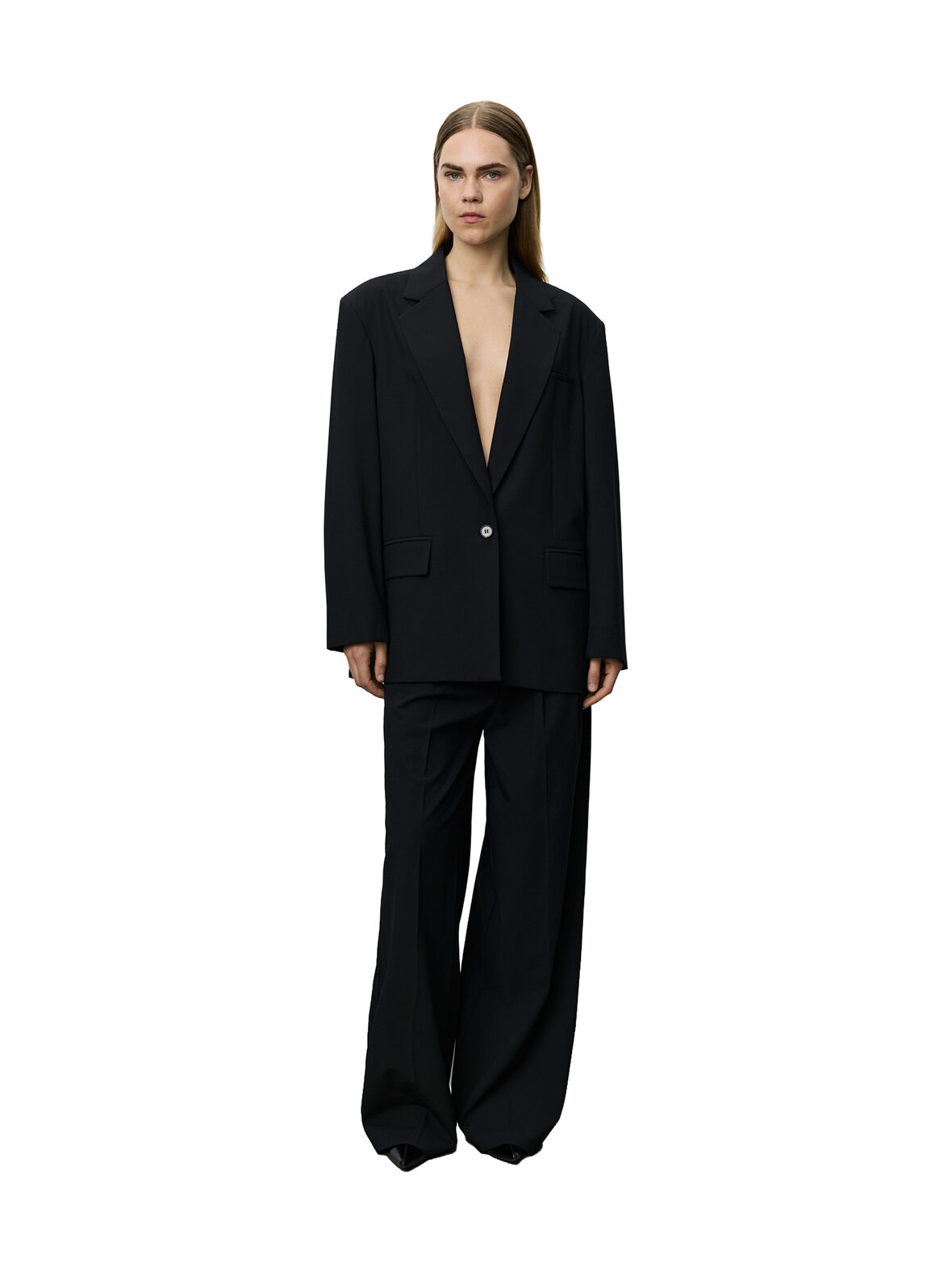
Sofie Schnoor | Elnasw blazer

Andiata | Gytta trousers
3. A quality shirt or blouse
A white button-down shirt is a classic, but you could also add a cream, light blue or beautifully draped blouse.
Silk and other beautifully draping fabrics are particularly well suited to occasions when you want a more polished look than usual. Cotton, meanwhile, is a versatile and easy-care choice that feels comfortable and works well for everyday office dressing.
4. A lightweight quality knit
A high-quality lightweight wool or blended knit is one of the easiest layering pieces.
Wear it on its own, over a button-down shirt or under a blazer. You can also choose a knit in an accent colour to instantly bring fresh energy to an otherwise neutral wardrobe.
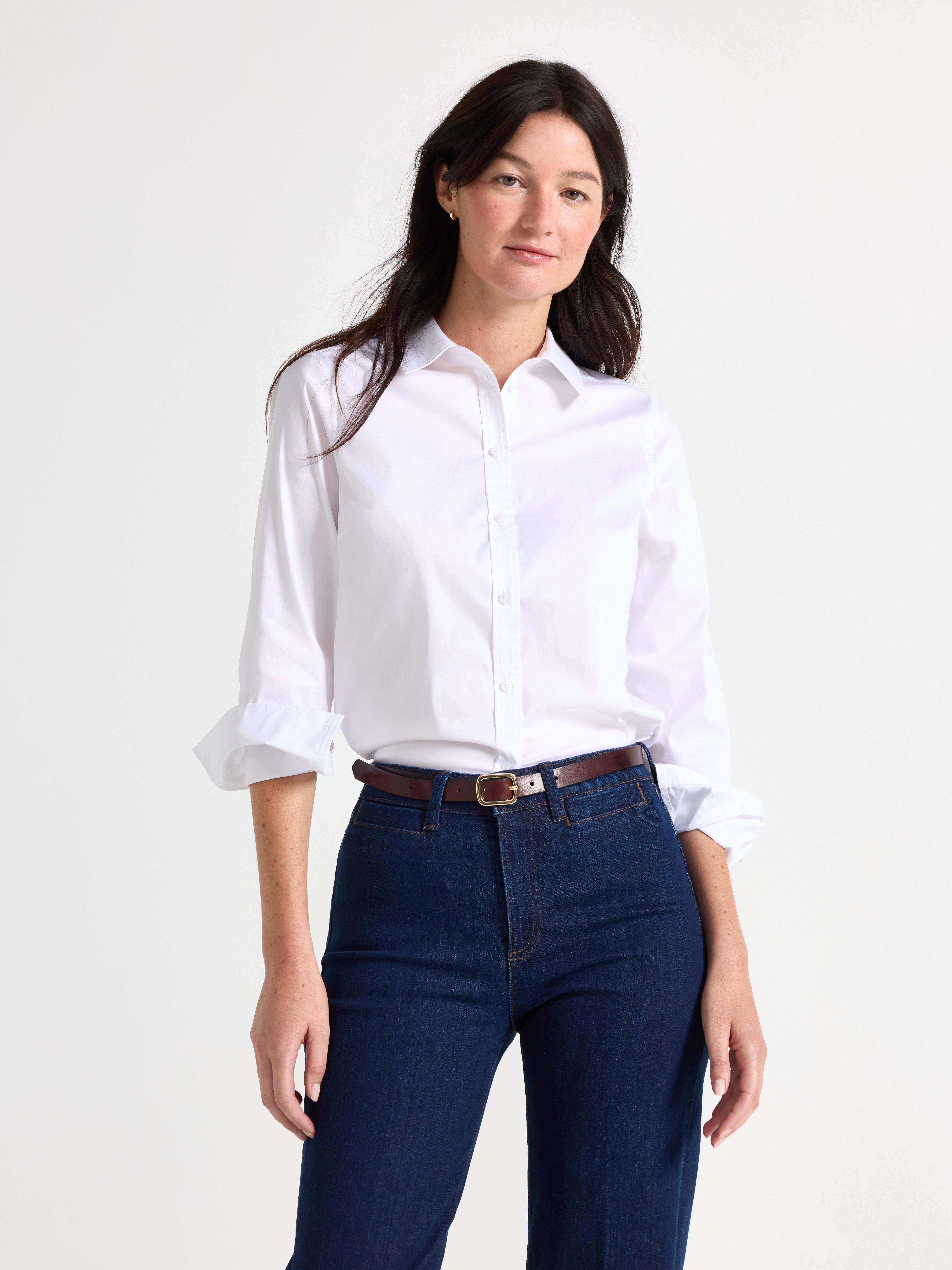
Slim-fit shirt
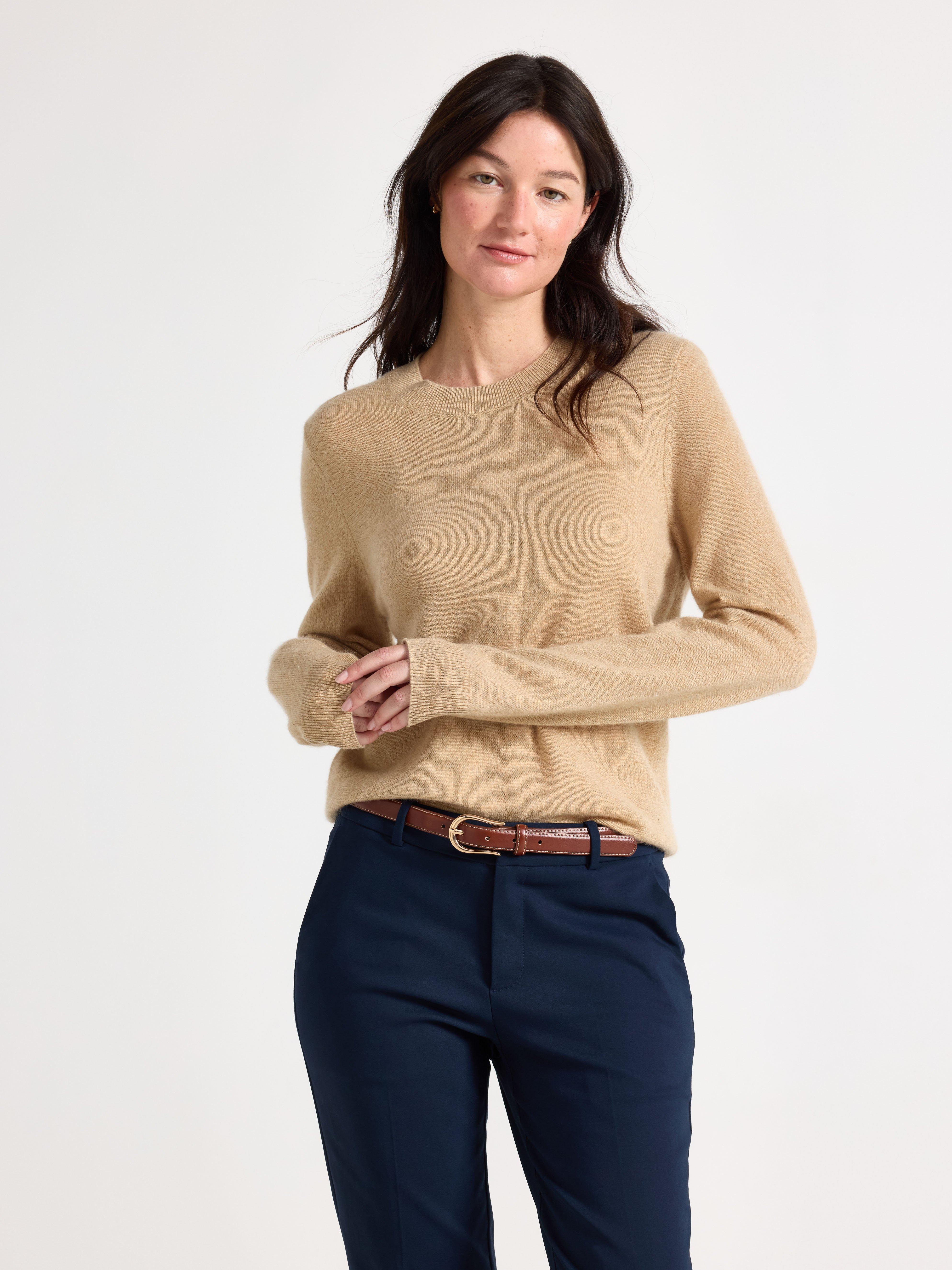
Cashmere-blend knit sweater
5. Smart jeans
Jeans work in many workplaces when the environment is relaxed enough. Dark, well-maintained and well-fitting jeans are a polished choice for the office. A blazer, quality knit and leather loafers can easily elevate jeans into a refined office outfit.
6. A skirt or dress
A dress is an easy choice for days when you do not want to spend time putting an outfit together. A skirt, meanwhile, pairs beautifully with knitwear, shirts and blazers.
A skirt or dress does not need to be particularly dressy. A simple style that can be worn with different layers will usually be the most versatile.

MAC women’s jeans

Part Two women’s skirt
7. Quality shoes
Loafers, ballet flats and smart ankle boots are all excellent starting points for an office wardrobe.
When it comes to shoes, comfort is especially worth prioritising. A beautiful shoe that you cannot wear all day will quickly end up sitting in the wardrobe.
8. A trench coat or wool coat
Outerwear completes the look, so its importance should not be underestimated.
A trench coat works well in spring and autumn, while a wool coat is ideal for colder weather. A neutral colour makes a coat timeless and easy to combine.

Dr. Martens Loafers

Superdry trench coat
How many clothes do you really need?
An office wardrobe does not need to be large. In fact, it is often better to think of your wardrobe as a whole rather than buying clothes one at a time without a plan.
A good question to ask before buying a new garment is: Can I combine this with at least three pieces I already own?
If the answer is only one, the garment may have a needlessly limited role. The goal is not the biggest possible wardrobe, but the greatest possible number of workable combinations.
For example, one blazer can work with tailored trousers, jeans, a skirt and a dress. One good knit can pair with both trousers and a skirt, as well as being worn over a button-down shirt.
What kind of office attire works in different workplaces?
Your workplace culture should always be the starting point for deciding what to wear. Especially when starting a new job, it is useful to first observe how others dress and what the general standard is in the office. This makes it easier to build your own work wardrobe. Polished smart casual is a good starting point in many work environments, but some workplaces may be more relaxed. The most important thing is that your style feels natural and suits the environment.
Traditional and formal work environment
In this kind of environment, a blazer, tailored trousers or a skirt, a smart blouse and classic shoes are good choices. Keep the overall look understated and polished, while adding personality through colour and small details.
Smart casual office
There are many more options in this environment. Jeans can work with a blazer and loafers, and a button-down shirt can just as easily be replaced with a quality knit.
More relaxed office
In a more relaxed workplace, jeans, knitwear, clean trainers and casual jackets can also be appropriate. In this setting, a polished impression comes above all from clothes being clean, well maintained and coordinated.
When in doubt, observe the workplace’s overall dress culture. Everyone does not need to dress the same way, but your overall look should fit the environment.
Office dressing in summer
Summer office dressing requires a little balancing. It may be hot outside, while office air conditioning can make the indoor temperature surprisingly cool. A good summer outfit works in both settings and looks polished without leaving you overheated.
In summer, opt for lightweight, breathable fabrics such as cotton, linen and fine wool blends. Looser cuts also make dressing more comfortable in warm weather. Wide-leg trousers, midi skirts, lightweight shirts and airy dresses are all easy office options.
Even in summer, keeping the outfit neat and well finished is important. Pair a relaxed linen shirt with tailored trousers or a skirt, or finish a simple dress with a lightweight blazer or cardigan.
In summer, choose layers that are easy to remove during the day. A lightweight blazer, cardigan or scarf may be useful in a cool office, but can be left off when you head outside.
Office dressing in winter
In winter, effective layering is the key to office dressing. You need warmth outdoors, while an outfit that is too bulky can quickly become uncomfortable indoors. The best solution is to build an outfit from several lighter layers that can be removed as needed throughout the day.
A lightweight base layer, quality knit and blazer make a versatile combination, for example. On colder days, add a wool coat on top, then remove the extra layer indoors. Cardigans, fine wool sweaters and button-down shirts also work well for layering.
In winter, materials are particularly important. Wool and wool blends provide warmth while still looking polished and structured. In addition to knitwear, wool trousers, heavier skirts, and various soft textures are great additions to a winter work wardrobe, bringing both warmth and visual interest to an outfit.
Colours and fabrics can also make a simple winter outfit more interesting. Rich shades such as dark green, burgundy, brown and navy suit the season and pair easily with neutrals.
Small details can make a big difference
You do not need to replace your entire wardrobe every time you want to refresh your style. A well-built work wardrobe is designed to last, and small changes can create plenty of variety.
One more contemporary piece can be enough to transform the look of a familiar work outfit. A trendier knit, a new trouser shape, a colourful blouse or a slightly more distinctive blazer can add seasonal variety alongside your basics without requiring a complete wardrobe overhaul.
Accessories can also make a big impact. A new bag, scarf, belt or piece of jewellery can give a familiar outfit a fresh look, as can a new colour. If your wardrobe is built around black, grey and beige, a single burgundy knit or forest-green bag can bring a whole new feel to the look.
Think of current trends as finishing touches rather than the foundation of your entire wardrobe. When your basics are timeless and easy to combine, you can update your style seasonally with a few considered purchases.
This way, your wardrobe stays both timeless and current without the need for constant replacement.
Before you buy, ask three questions: does it work, will I wear it, does it feel like me?
Before buying a new piece of workwear, pause for a moment and ask yourself:
Does this work with several pieces I already own?
This helps prevent a new purchase from becoming a one-off piece that is difficult to combine with the rest of your wardrobe.
Will I actually wear this?
Even a beautiful garment can be left on the rack if it has no natural place in your everyday life. It is also worth considering whether you can see yourself wearing it for years to come.
Does this feel like me?
A garment does not have to be completely timeless, but it should suit your personal style rather than feeling right simply because it happens to be trendy right now.
When a new garment fits into your existing wardrobe and you know you will genuinely wear it, the purchase is much more likely to be a good one.
Quality or quantity?
Not everything has to be expensive, but some pieces are usually worth investing in. Blazers, trousers and shoes are examples of garments that tend to get a lot of wear. A good fit, solid construction and quality materials can make them considerably more durable and comfortable to wear.
For trend-driven pieces, on the other hand, you can keep the budget more modest. This allows you to add variety without every update requiring a major investment.
Ultimately, what matters is not the price of a garment but how often you wear it. A good purchase is one you reach for again and again.
Frequently asked questions about office attire
Can you wear jeans to the office?
At many workplaces, yes. Dark, neat and well-fitting jeans are particularly suitable for relaxed or smart casual environments. If you are unsure, pair jeans with a more polished top, such as a blazer, quality knit or blouse.
What should you wear to an important office meeting?
Choose one clearly polished outfit, such as a blazer, tailored trousers, a blouse and loafers. The fit and overall neatness matter more than any individual garment. Make sure your clothes are pressed and well cared for.
How can you make your office style more modern without buying a new wardrobe?
Start small. New shoes, a bag or a single new colour can quickly refresh a familiar outfit. Changing silhouettes can also make a big difference. For example, a slightly looser blazer or a different trouser shape can give an old outfit a modern update.
Which colours work well for the office?
Neutral shades are an easy starting point, but many other colours also work well for the office. Forest green, burgundy, navy, light blue, cream and many muted shades are easy to incorporate into workwear.
How many clothes do you need in a work wardrobe?
There is no single right number. A better goal than aiming for a specific quantity is to make sure most of your clothes work in several different combinations. A good work wardrobe can be surprisingly small when it is designed as a cohesive whole.
In conclusion: a good work wardrobe makes getting dressed easier
Stylish office dressing does not mean starting every morning by inventing a brand-new outfit.
At its best, a work wardrobe makes everyday life easier. With a few well-fitting essentials, practical shoes, a handful of colours that work together and a few interesting details, you can create countless outfits without a wardrobe overflowing with clothes.
The key is to find a balance between your personal style, workplace expectations and practicality. A good office outfit looks polished, feels comfortable and lets you focus on what you are there to do during the working day.
And that is exactly why a functional work wardrobe does not have to be large. It simply has to work.